I know exactly where I’d need to stand to re-take this photo a century or so after the photo below was taken, but I’d likely never take this photo because
the Ted Wind Bridge (NYS 169) now swoops across the Mohawk River here, connecting Route 5N with 5S and I-90. The bridge is efficient, but it ruins the view downriver.

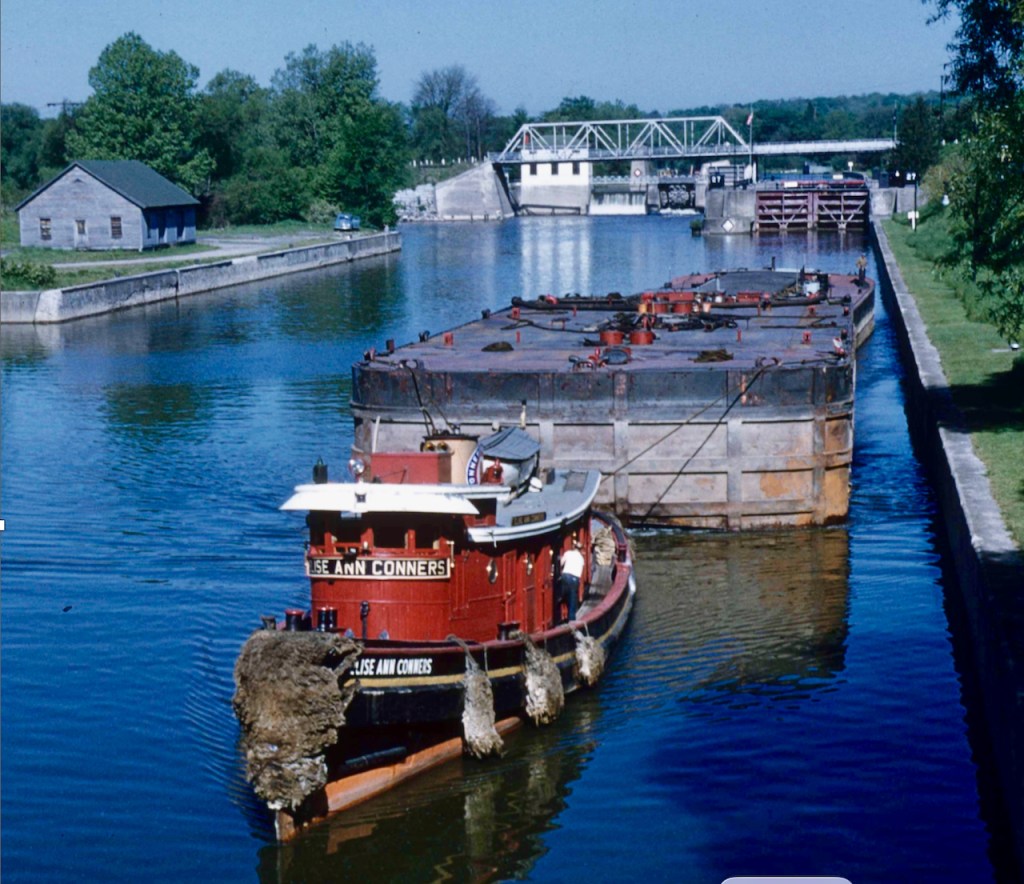
I took this photo on a snowy November 2016 morning as a European river freight barge headed east on the canal.

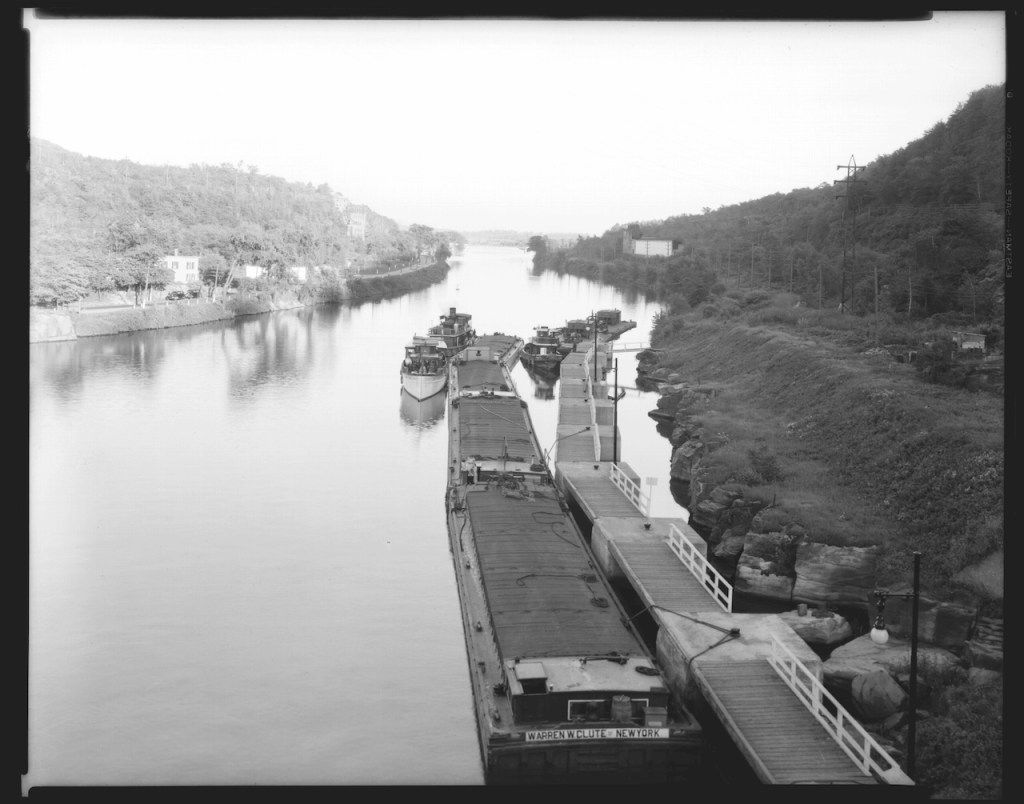
But let’s have a closer look at this image from the CSNY archives. On the Mohawk below lock 17, six wooden barges and three steam boats are rafted up, secured to the bank on bollards. Anyone know anything about the tugboats?
Between the bollard islands and the south bank, fill has not yet been added. Also on the south shore, the closely spaced poles demarcate the tracks of the West Shore Railroad, now the Empire State trail bike path. On both sides of the river you can see stone crusher/loader sheds. More on the two operations here and here.

Zoomed in a bit more, notice the Finks Basin Bridge, the way to cross the river before the Ted Wind Bridge was built. Finks Basin Bridge was removed in the early 1980s because it was obsolete. More on the series of bridges in the vicinity here.

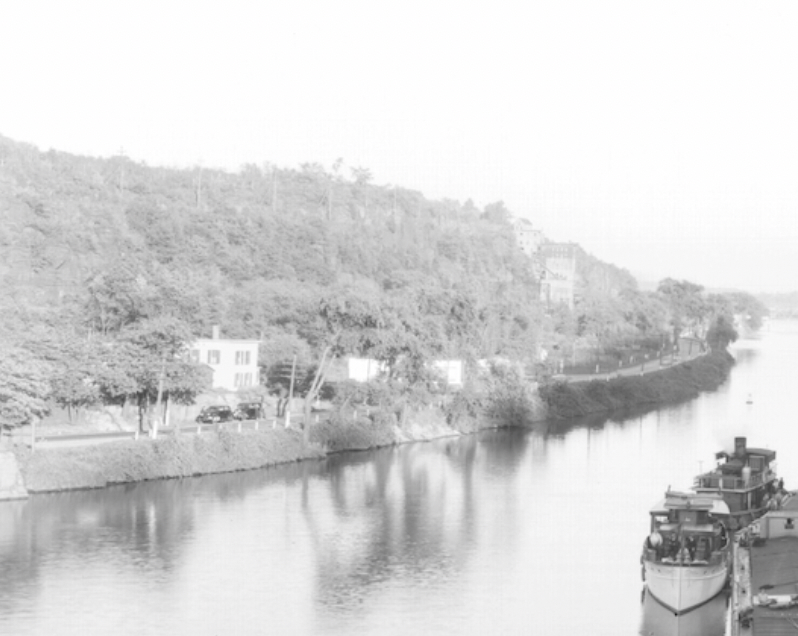
In the photo below, note the two autombiles parked along river road near a large stately house with the John Pearce Stone works where the ridge slopes down toward the river. To this day, lots of freight and Amtrak run along tracks behind that house, although the curve has been modified because of the deadly train wreck of April 1940.
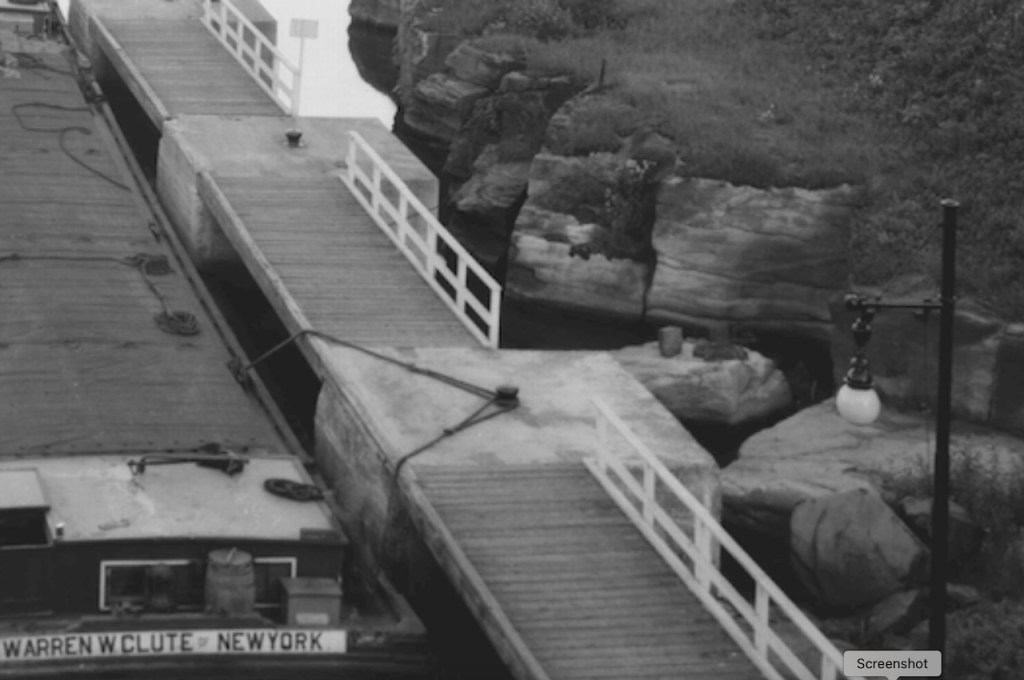
In the section below, note the impact of erosion on the rock along the bank, the same rock as near Lock 17, technically located on Moss Island and a favorite with rock climbers and geologists. Warren W. Clute was president of Watkins Salt Company and Watkins Glen National Bank.

 Dispatches from the Samuel Center

Leave a comment