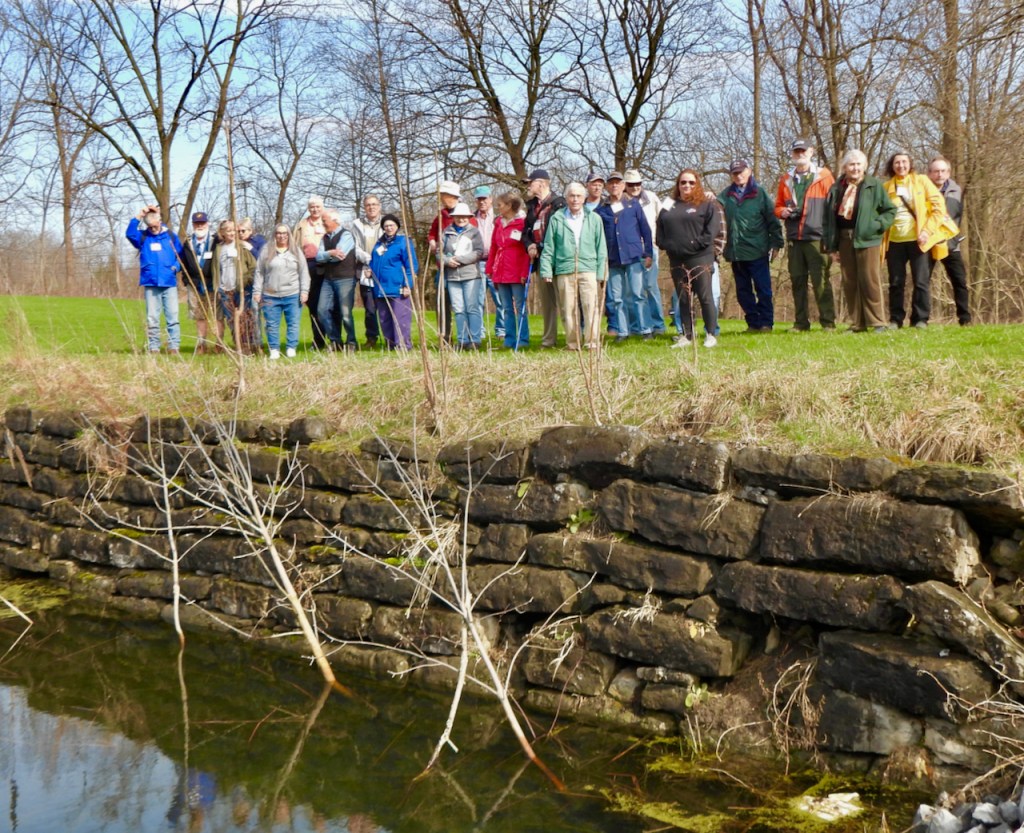
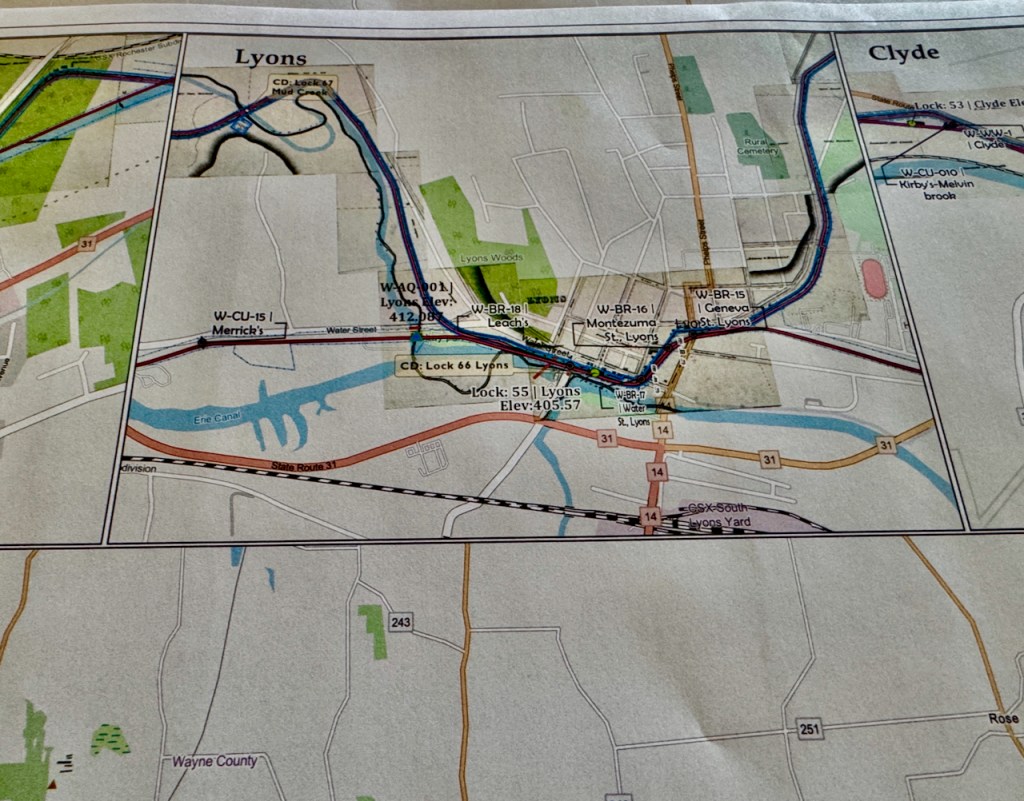
Approximately 50 folks from five US states and Ontario trekked and bussed around Wayne County last Friday and Saturday to see remnants of Erie Canal infrastructure. Wayne County is home to 35 miles of contemporary Canal and six active locks, more than any other county in NYS. Much can be seen if you get off the beaten path, but there are a number of places, especially along Route 31 where you can see parts of the original Canal even though you might not recognize it as such.
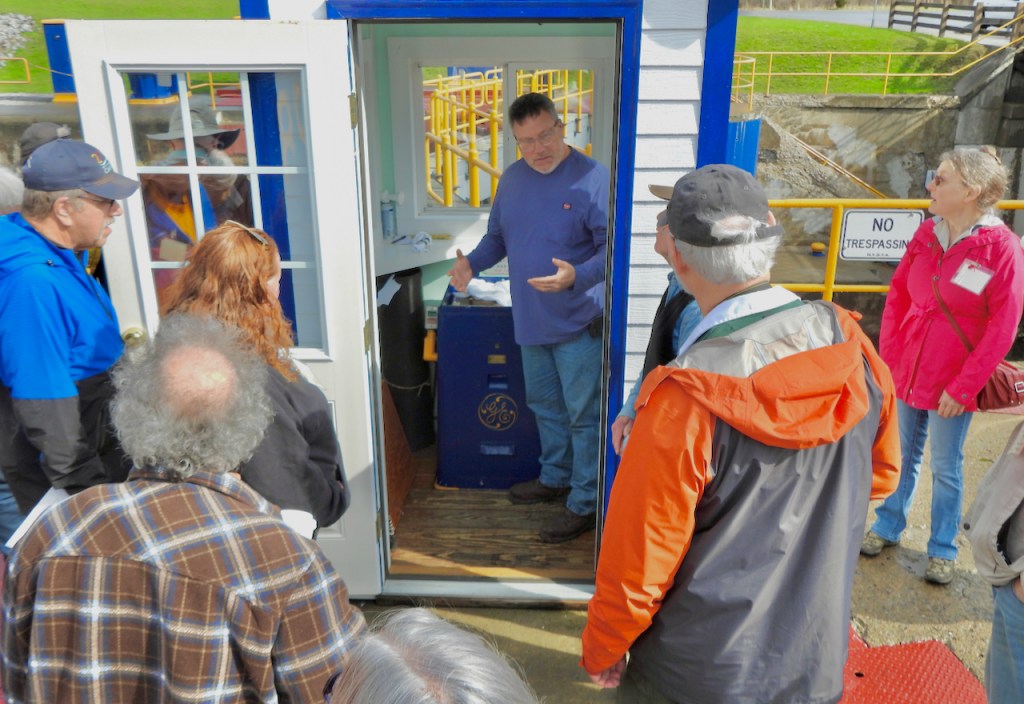
We started in Newark, where lockmaster David Richard explained the locking process.
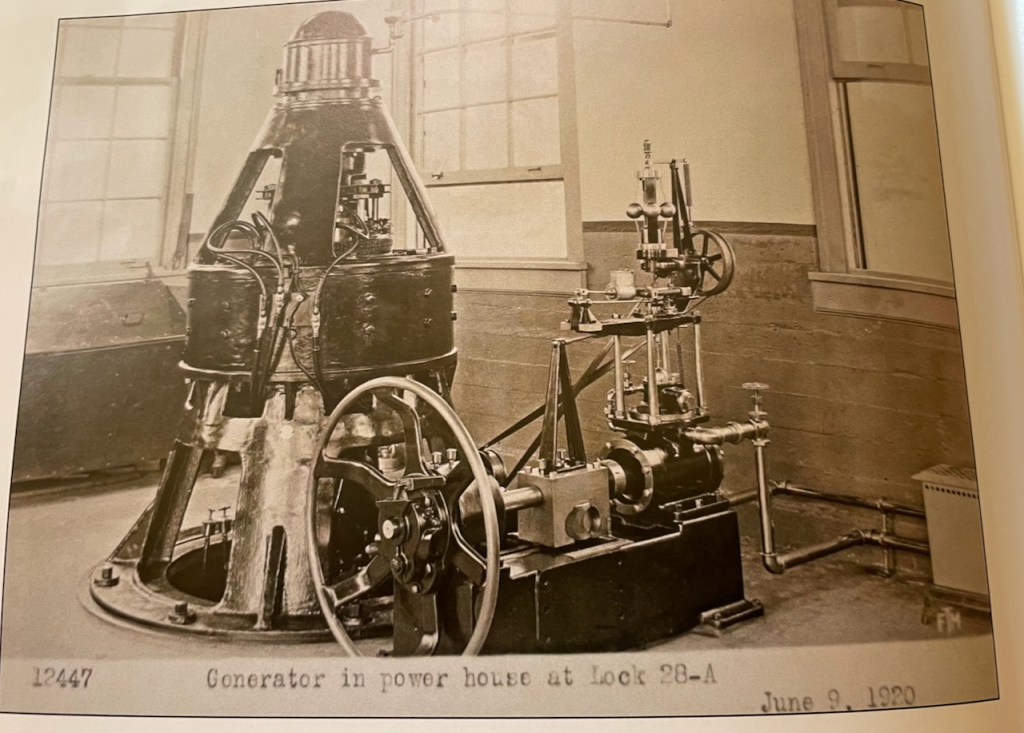
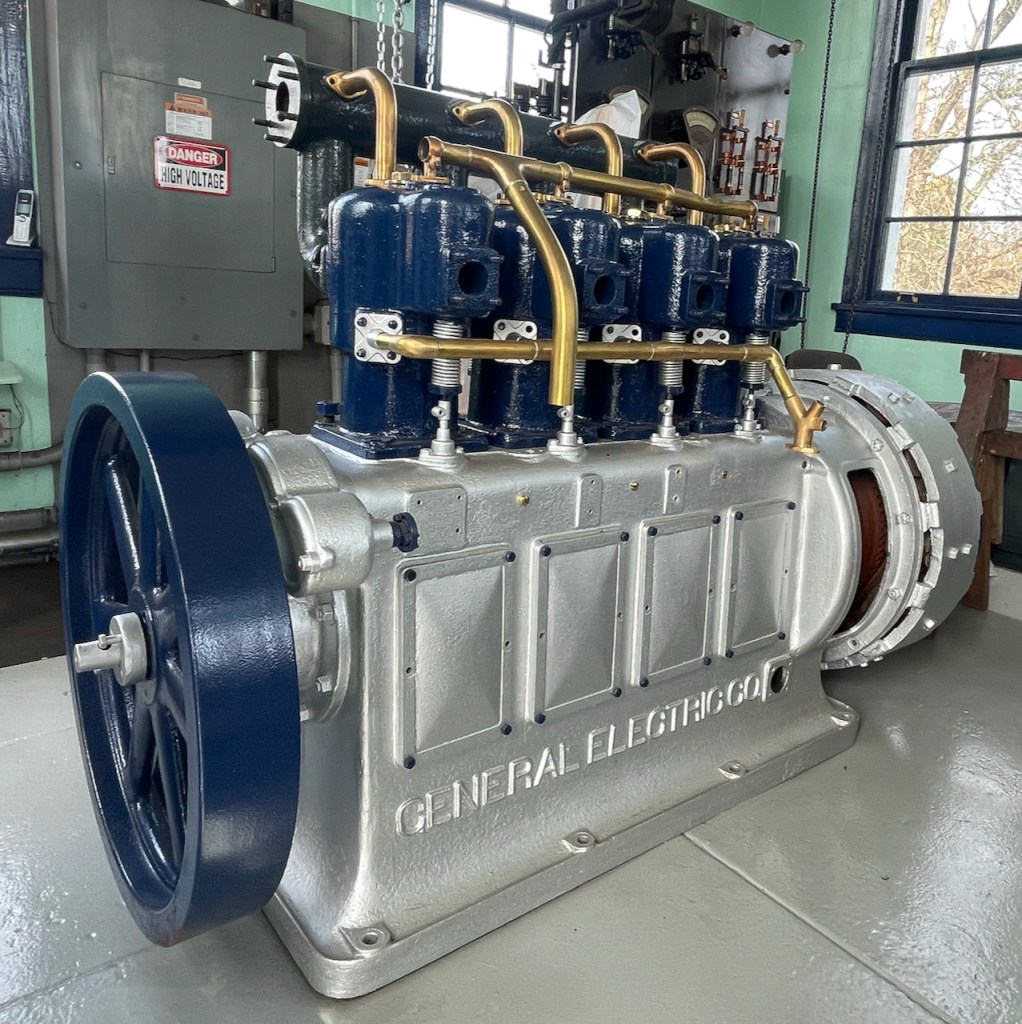
Some locks have intact generator rooms today, functional and unchanged since the construction of the Barge Canal, like
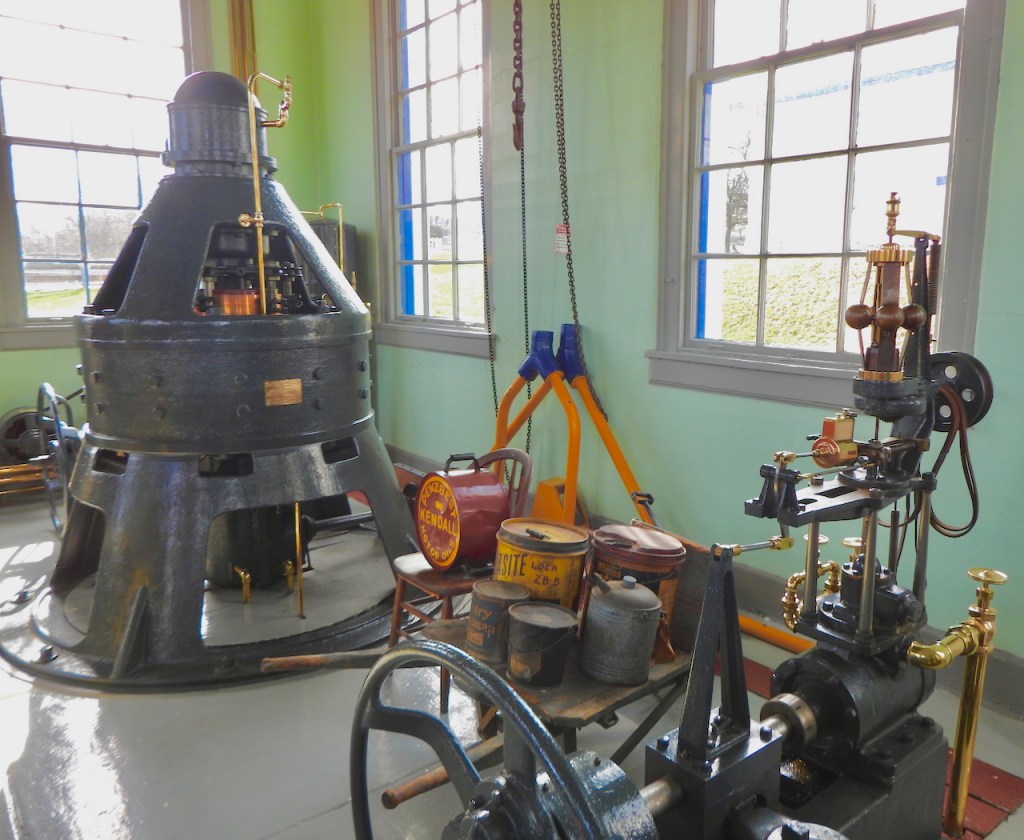
this room with the same equipment in 1920. When the Barge Canal opened in 1918, no AC power grid existed, so locks needed to generate their own power using water or some other source.
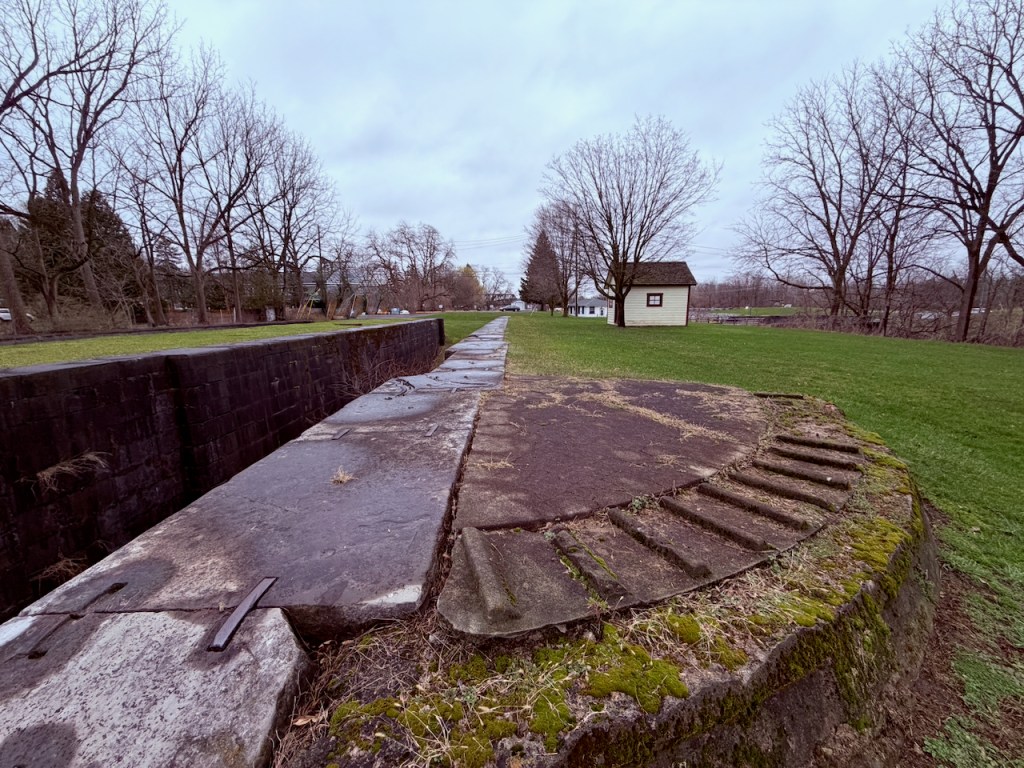
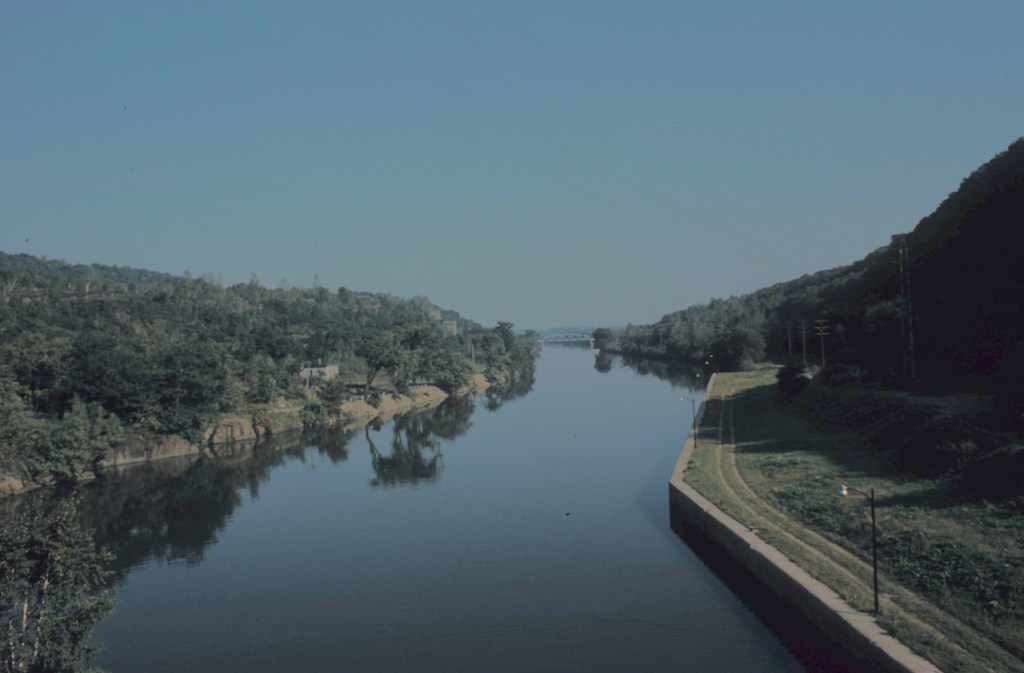
Durable Onondaga limestone, used in the construction of the locks and other infrastructure, leaves Wayne County with a classical legacy all its own.
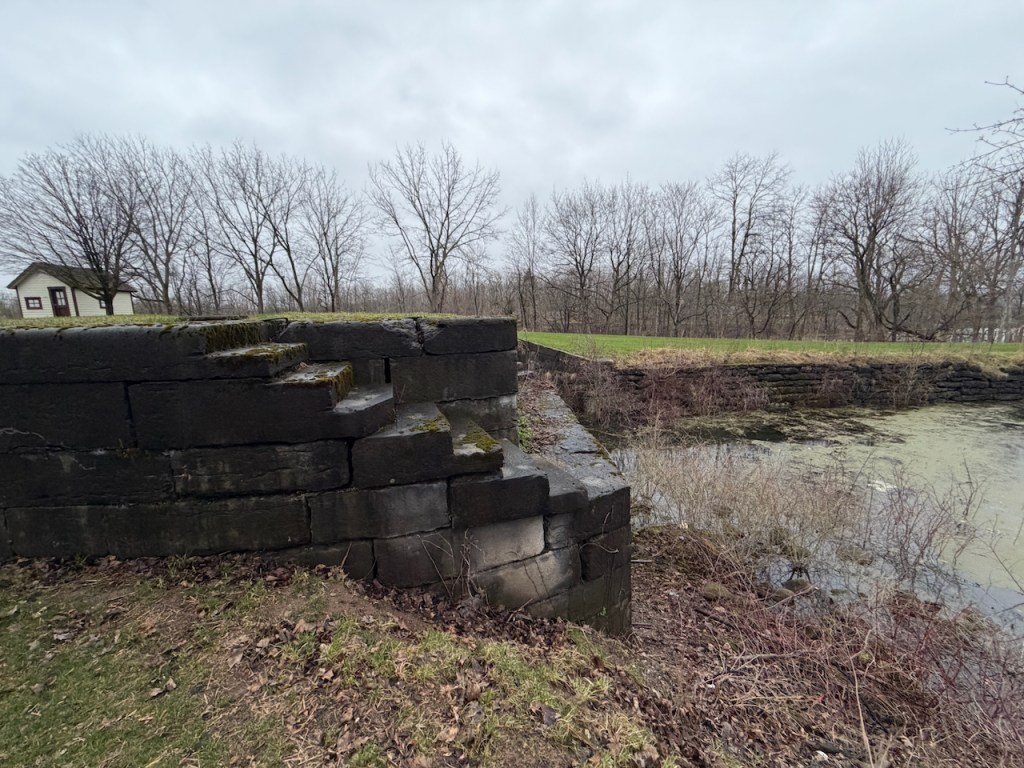
All photos up to this point were taken within short walking distance from lock 28B on N. Clinton Street.
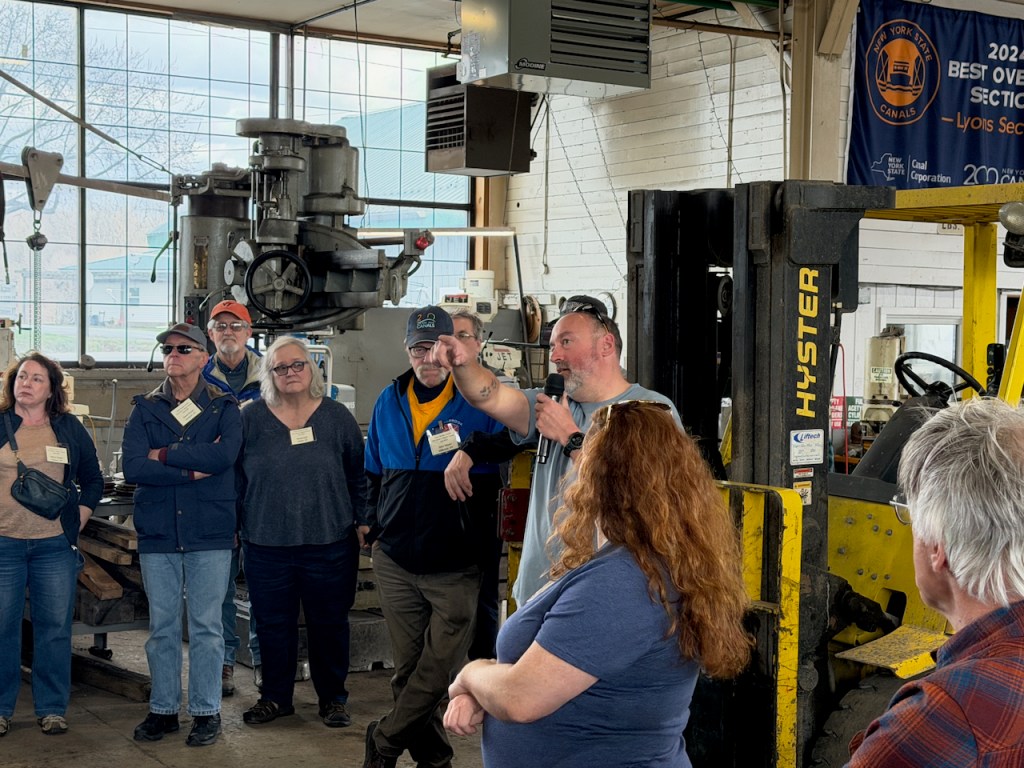
We had a tour of the contemporary Lyons facility, both outdoors and
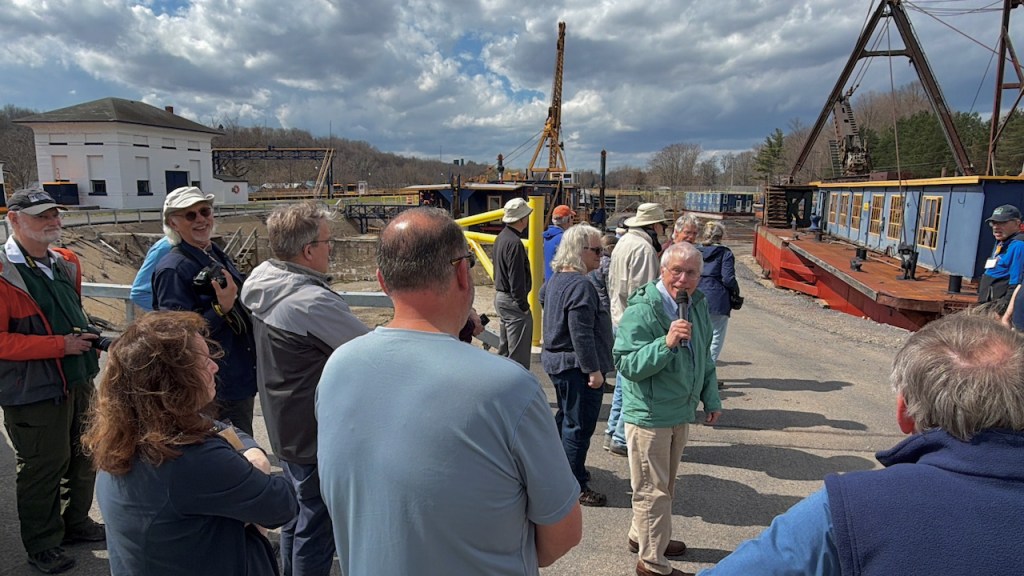
indoors, where Canal section superintendent Troy Sebastiano explained the tools and tasks involved in operating the system.
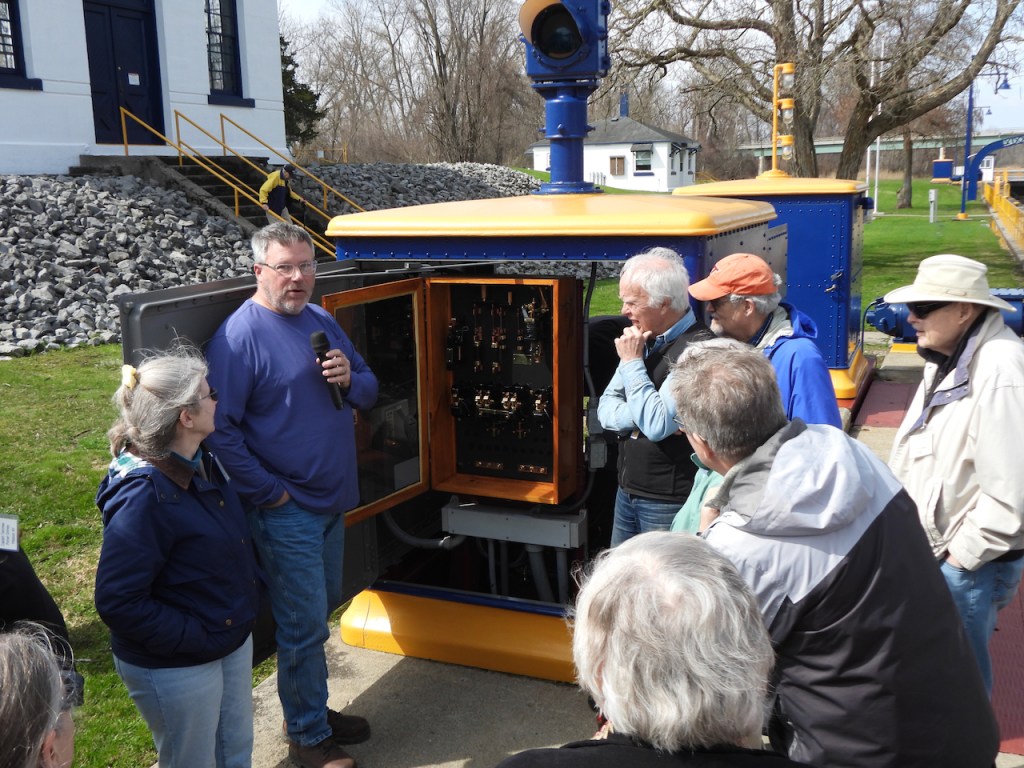
We then traveled to May’s Point, lock 25, and saw
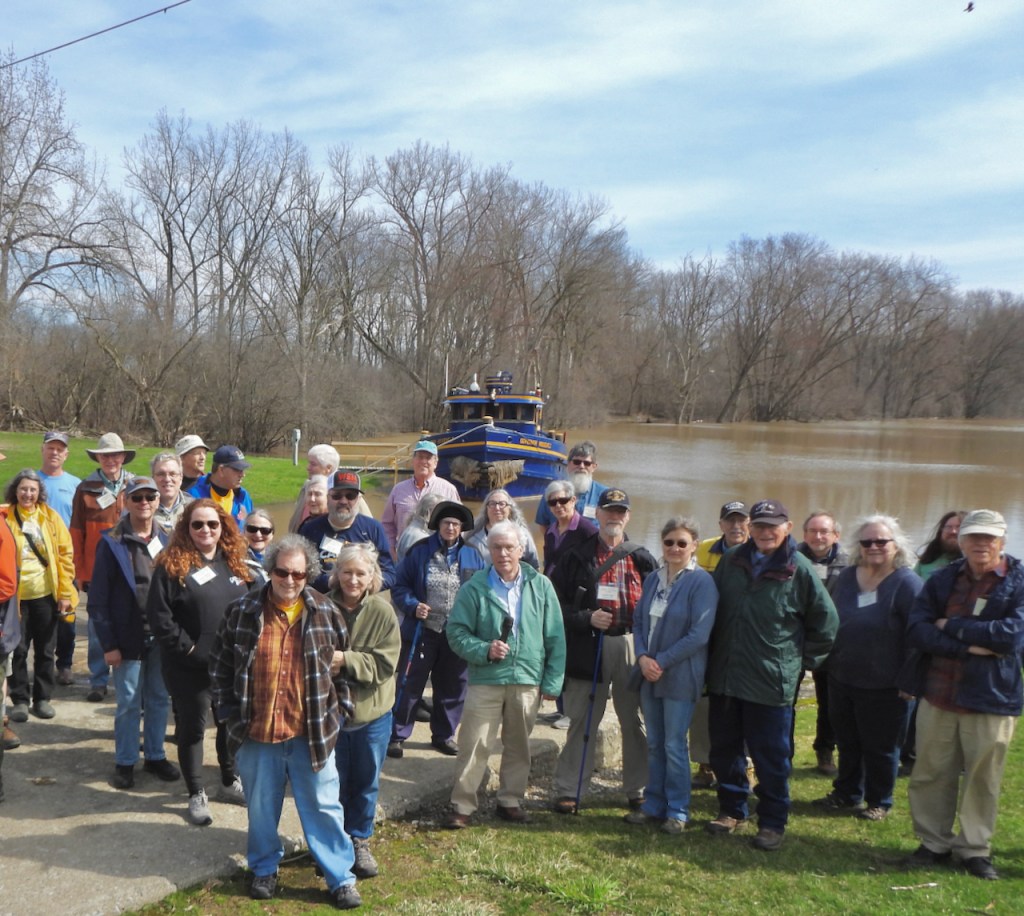
more of the inner workings, tirelessly maintained for over a century.
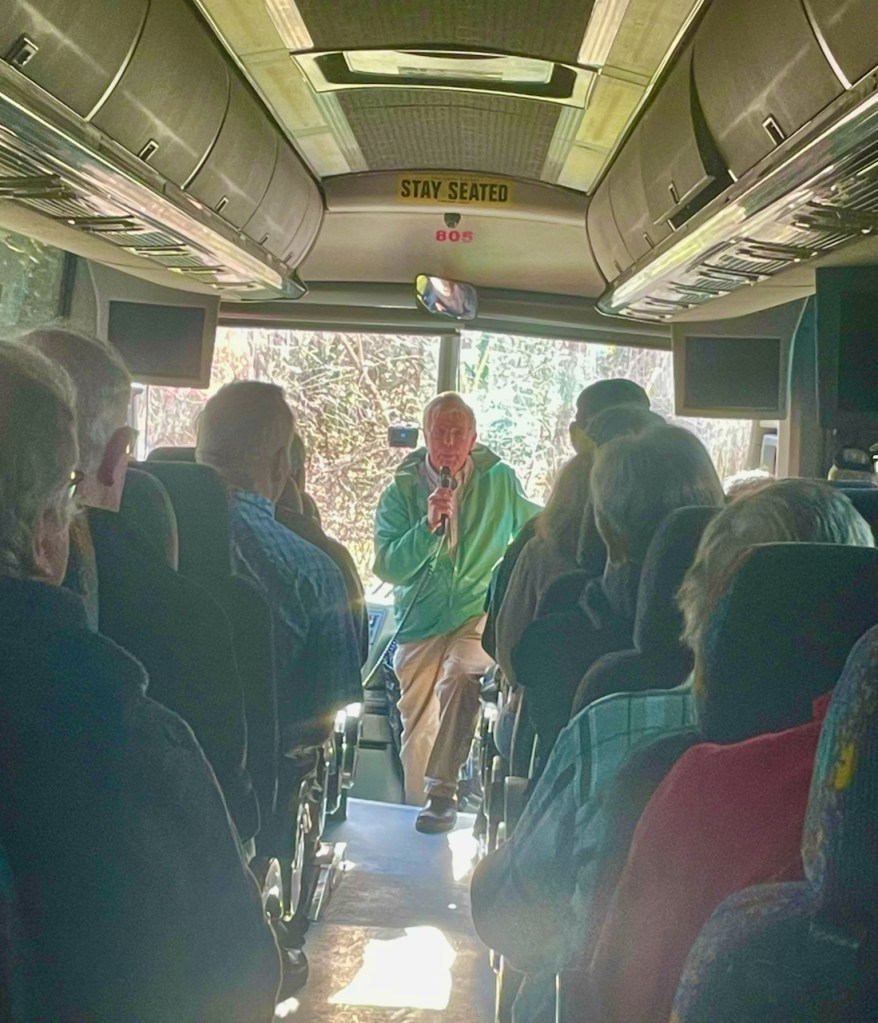
Saturday morning, we departed Newark by coach and
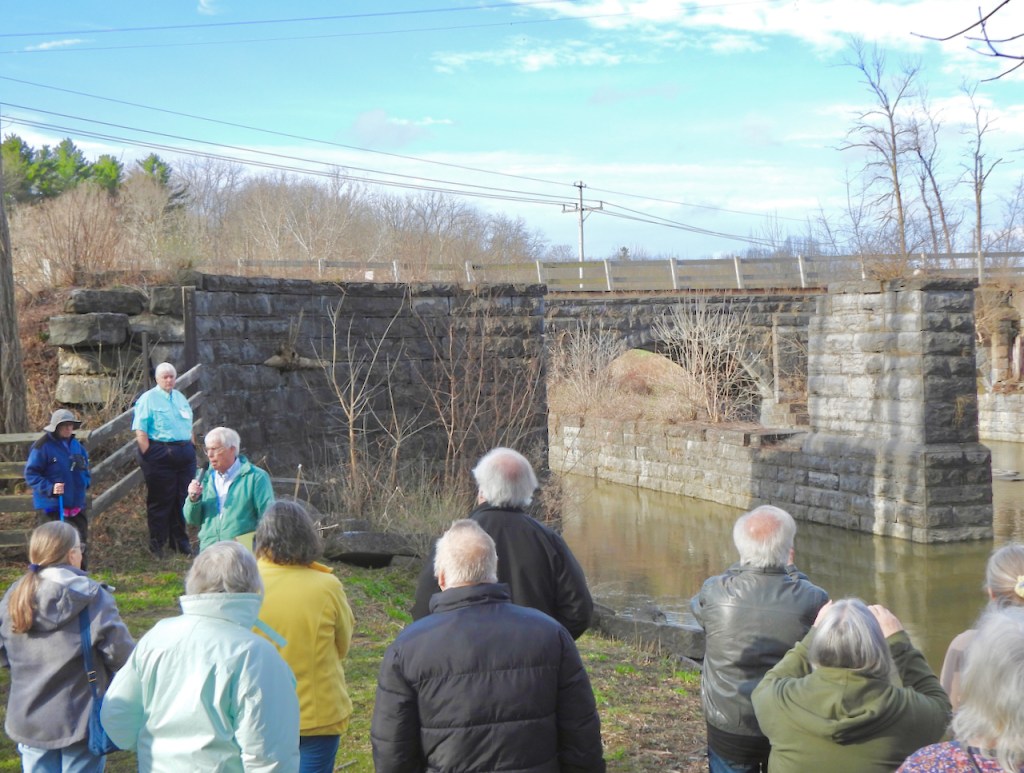
traveled to Palmyra to see the aqueduct there. Unfortunately, it is about to fail. See it now before it does. The best photo would be from along Route 31 looking east. Click on the following quote for the source: “83 locks were built to negotiate a total rise of 568 feet between the Hudson River and Lake Erie, and 32 aqueducts were built to pass over existing waterways.”
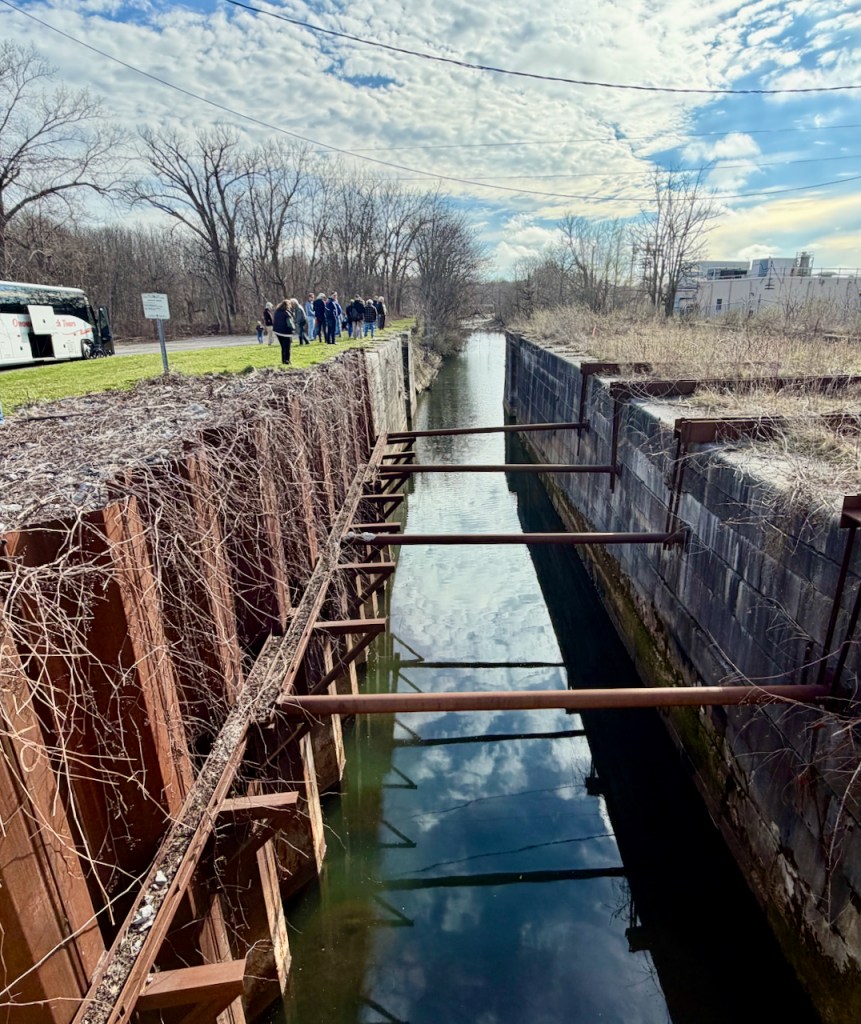
Old lock 61 requires bracing to keep some sections intact.
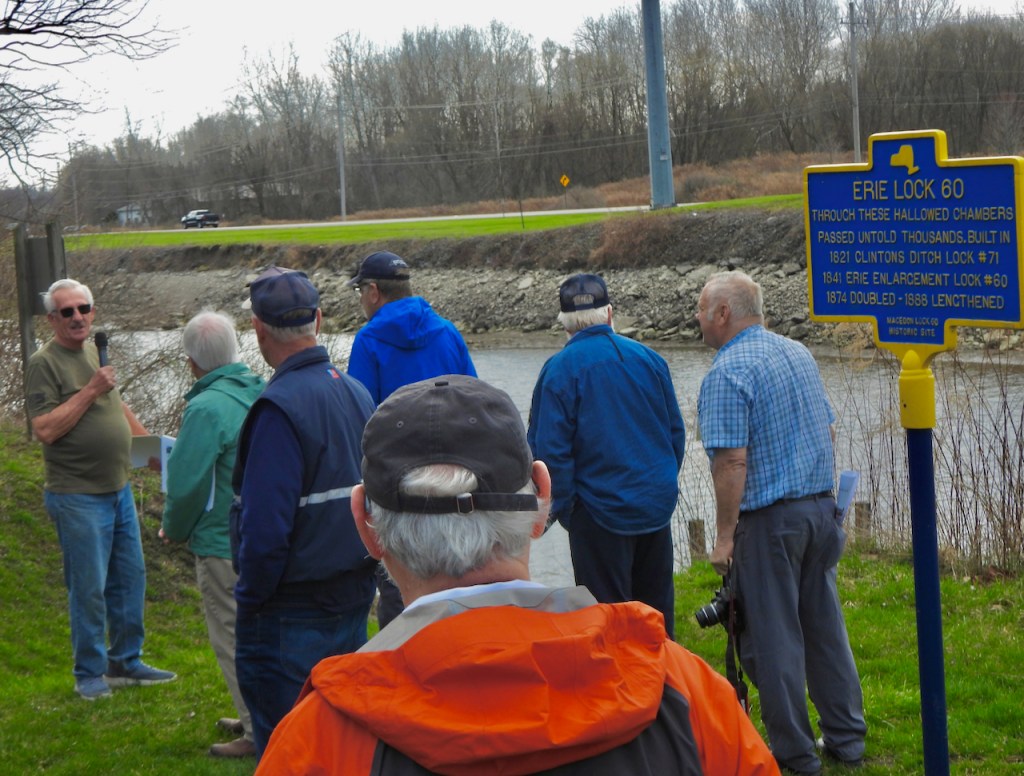
Old lock 60 is a park maintained by volunteers.
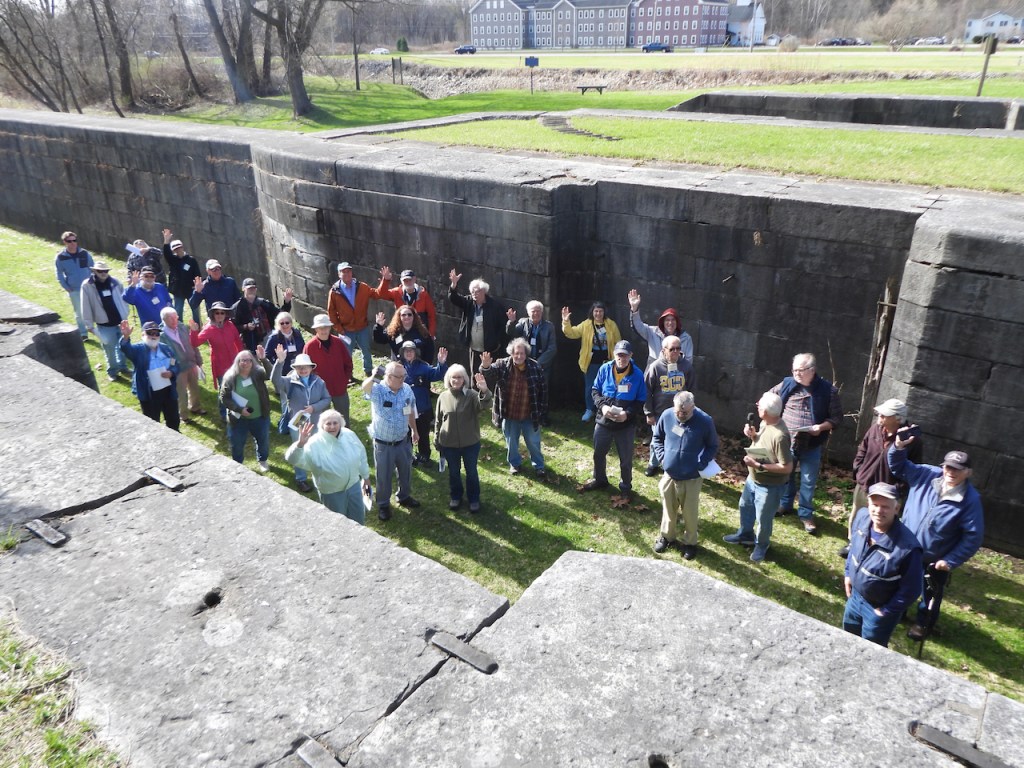
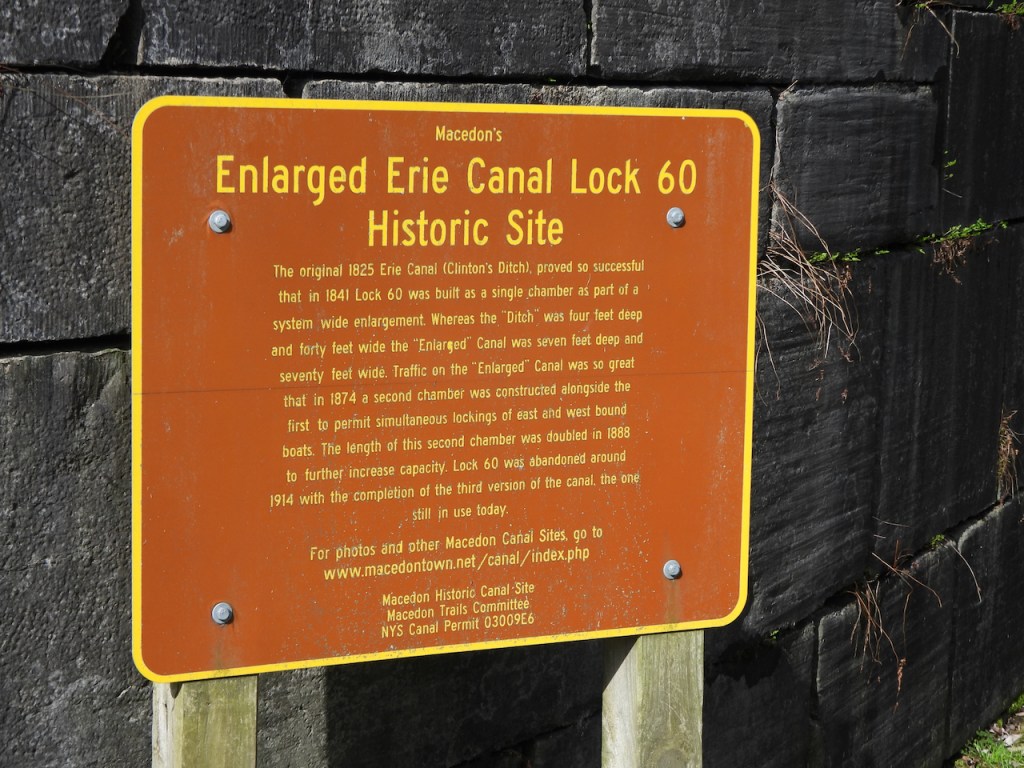
Bill Lawton is one of the dedicated volunteers who welcome visitors to the site.
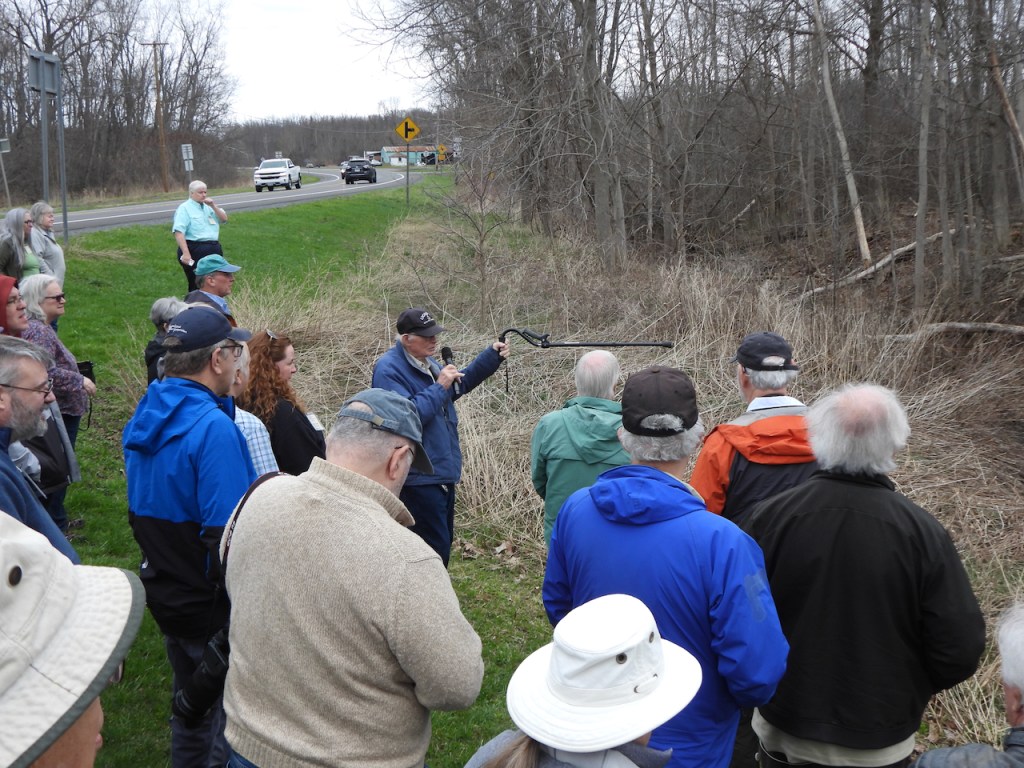
Bob Stopper is another dedicated student of Canal heritage, pointing out infrastructure in places where folks pass unseeing daily.
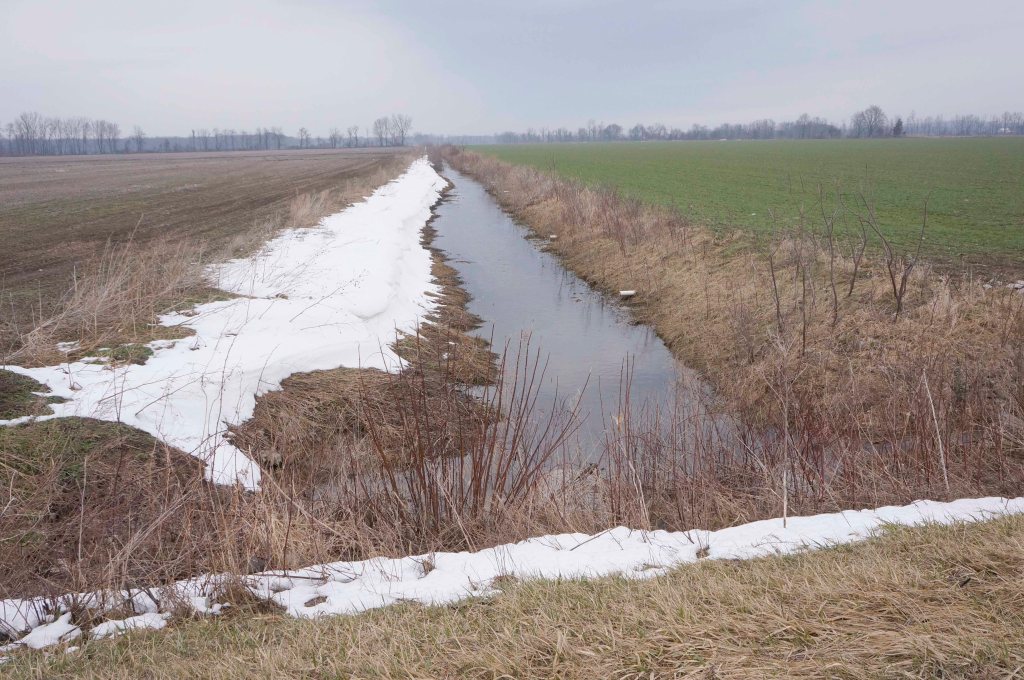
There’s so much of it out there, unmarked or
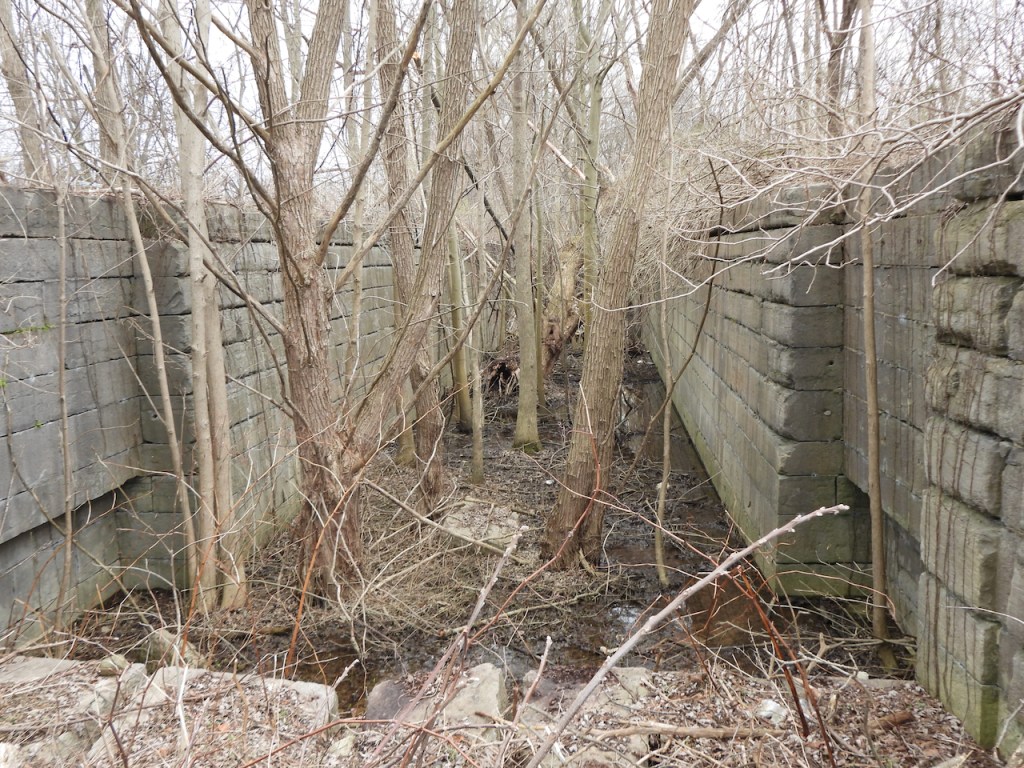
visible only during the cold season. Foliage will soon obscure this even if
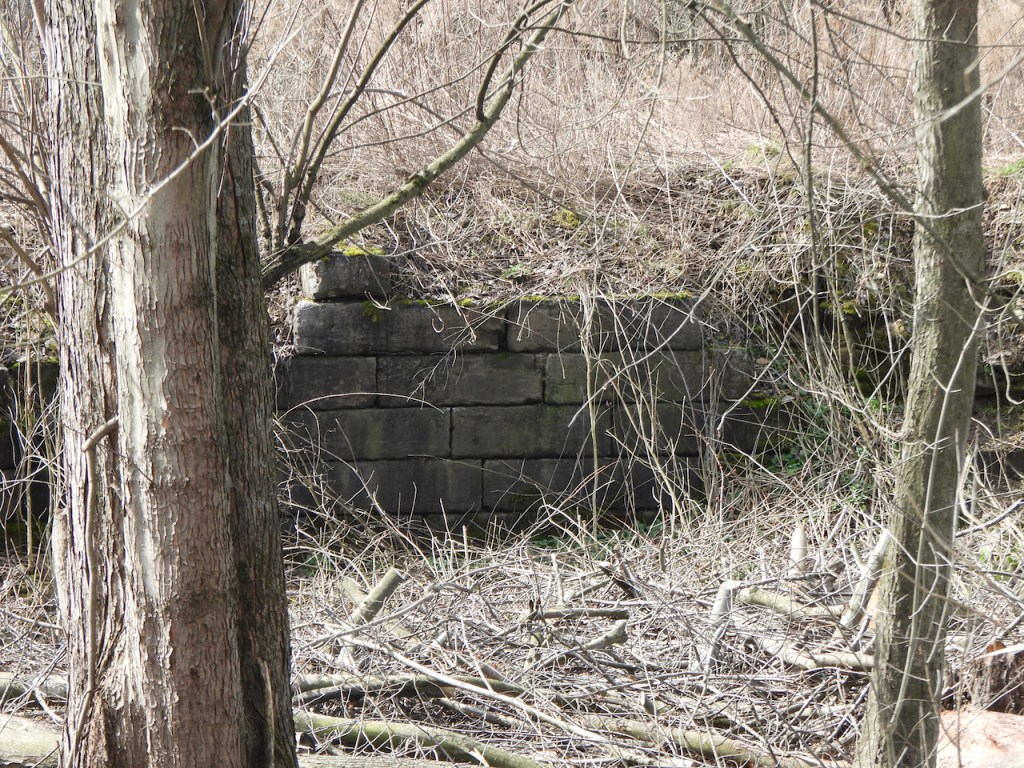
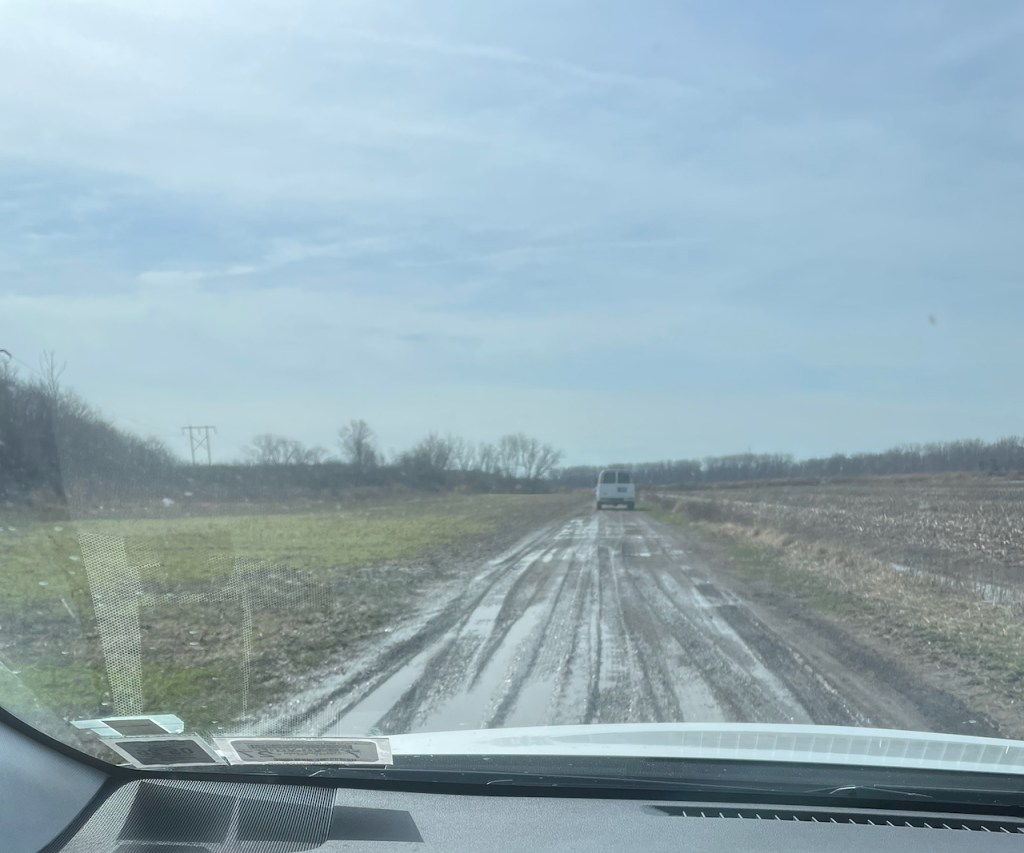
you go searching for it–with permission–down private roads maintained by farmers.
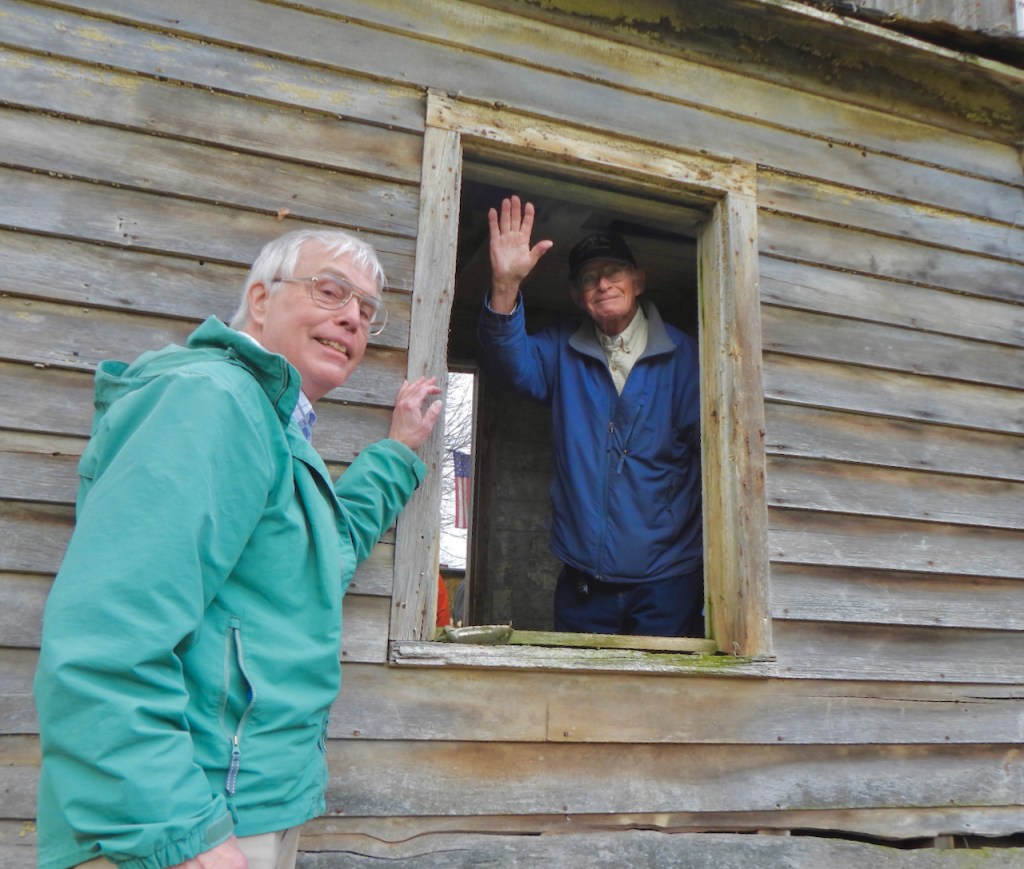
Many thanks to Craig Williams and Bob Stopper and others for orchestrating and interpreting Wayne County. Thanks to Ted Olsen for some of these images; others by Will Van Dorp.
One clarification: you can transit NYS via the third [or so] iteration of the Canal today from mid-May until almost mid-October. The “ruins” here are from 19th century iterations of the Canal.
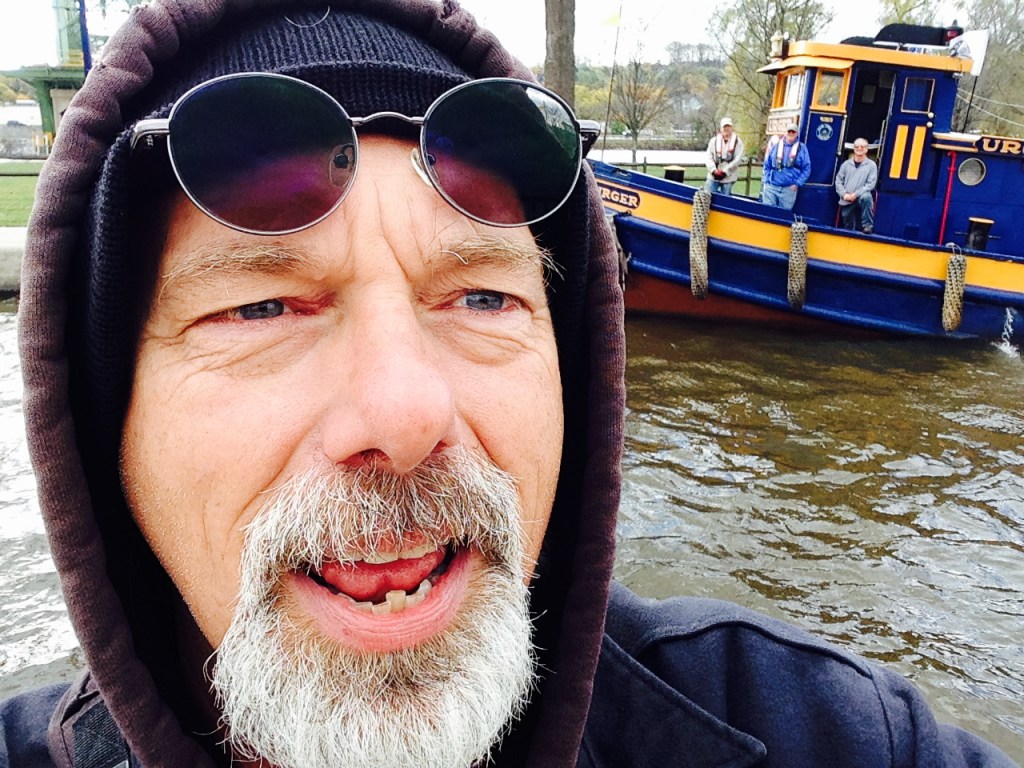
If you were on the tour and wish to add info, please comment below. Also, please get in touch with photo/info for the Faces and Voices series.
 Dispatches from the Samuel Center
Leave a comment