
Lee Rust’s March 5 comment was really on the mark: “All the decades of planning, materials and physical labor that went into the Canal and its infrastructure are invisible to us. We tend to perceive these vast constructions as if they were natural features, when in fact they are monuments to the constructive possibilities of human imagination and effort.”
The image below shows at least 10 workmen creating infrastructure that now might appear natural. I’d call the scene a photographer’s break. I can image the heat of the day and the smell of the exposed swamp mud, but I don’t know what the landscape behind the photographer here looked like, or how the photographer arrived here.
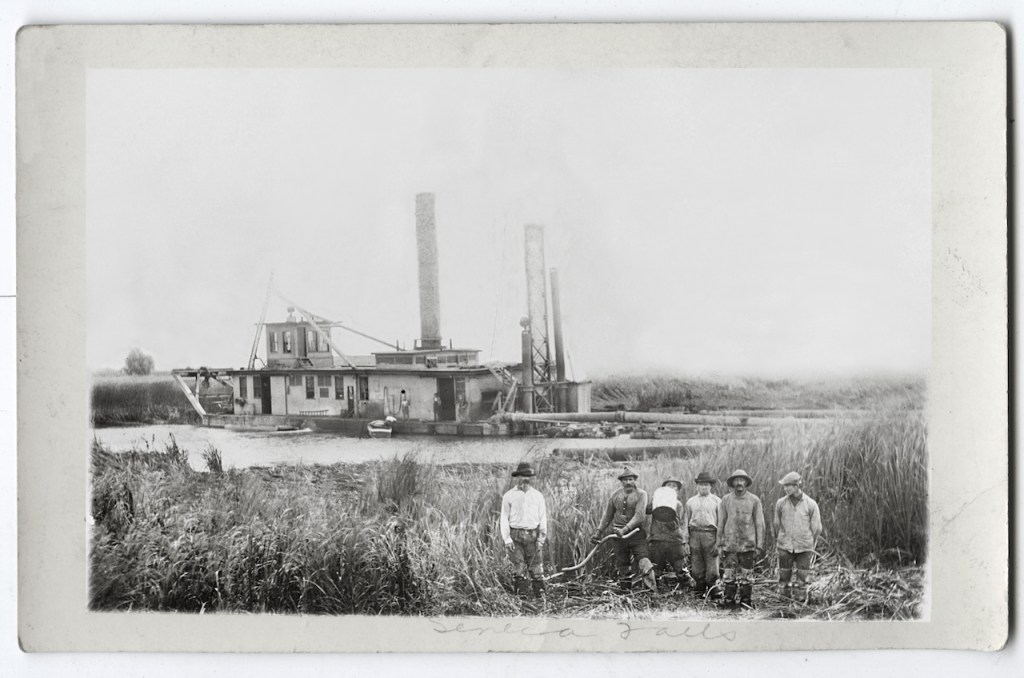
Unlike many photos of dredges used in excavations for the NYS Barge Canal, this dredge has no nameboards. That’s a shame, because when you have nameboards you can sometimes get much more information. On the other hand, how many “nameless” dredges might have worked near Seneca Falls in the first decade of the 20th century?
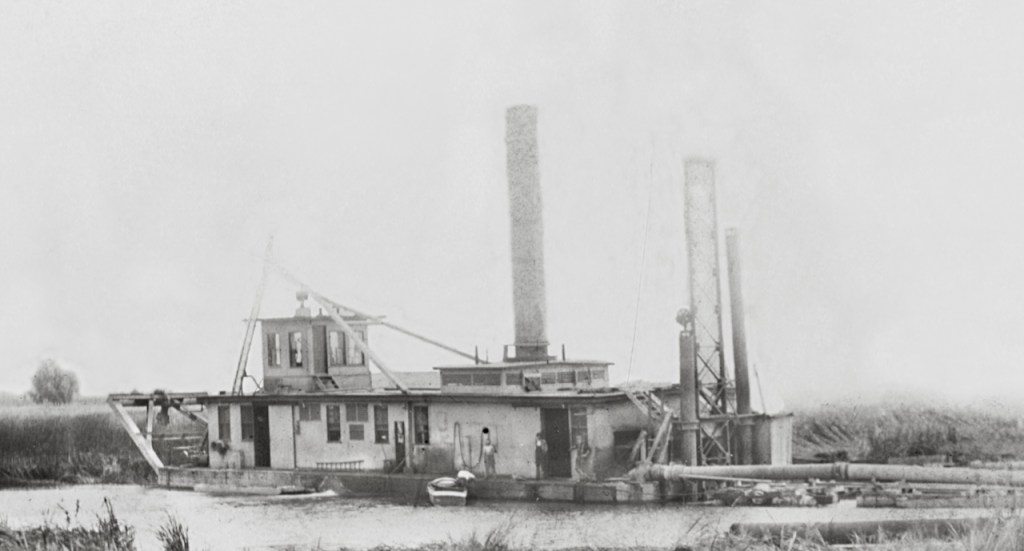
Three crew on the dredge “got the memo” to pose. Maybe the fourth person in the skiff was trying to turn the small boat before he thought the photographer would snap the shot.
A huge pump inside this barge would send a slurry of loosened mud from the swamp out to a chosen spoils site through the pipe disappearing off the right side of the image below.
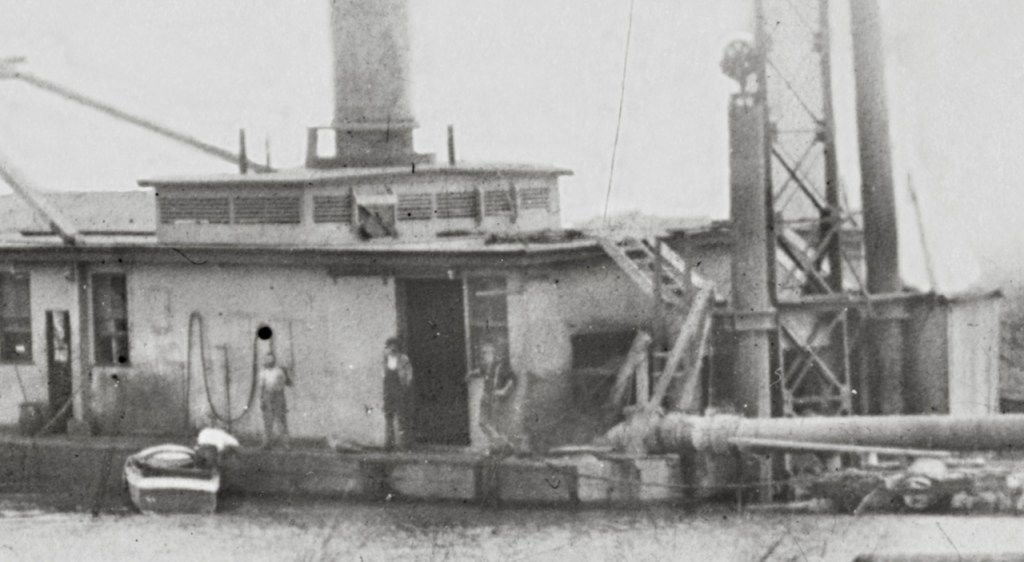
How this crew of six on the bank here relate to the dredge crew . . . I’m not sure.
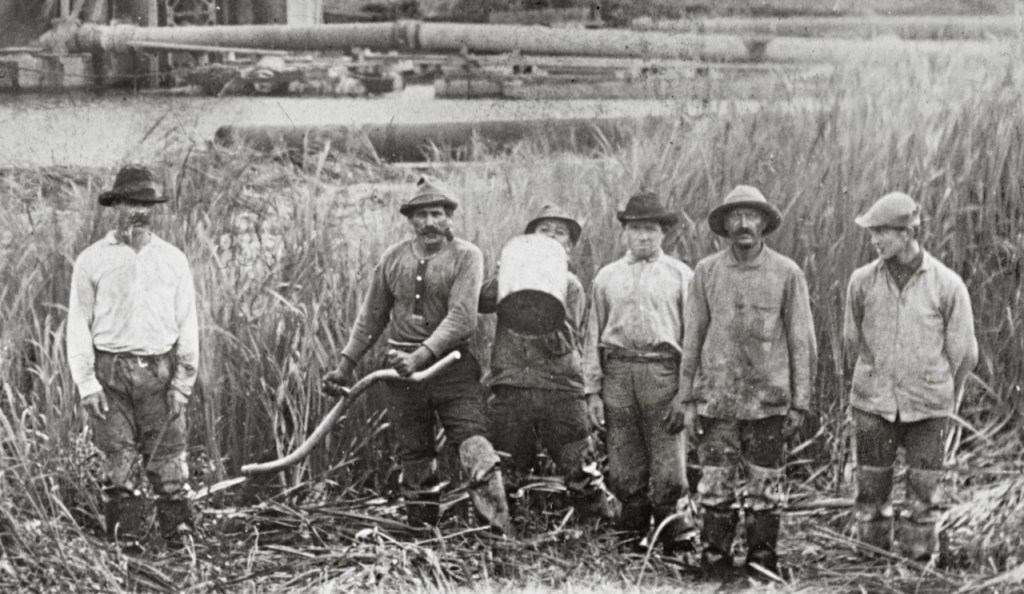
Brothers or just co-workers with similar mustaches, pipes, and hats? The one with the scythe dangerously close to the other’s left foot . . . was he a jokester? Were they clearing a path on the bank so that the photographer could get out to the dredge via the skiff?
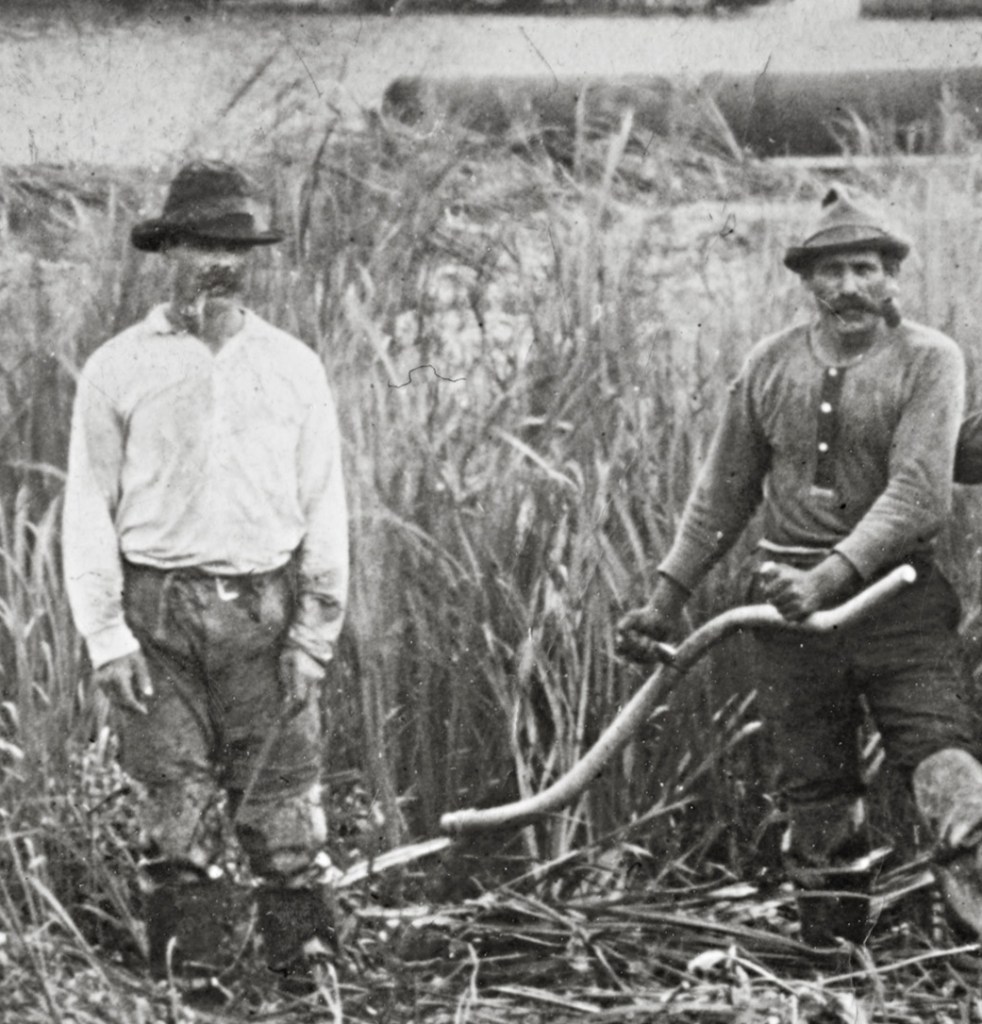
So much to know here. Any help?
Thanks to Bill Hecht for cleaning up these images and to the folks at the American Canal Society for their helpful information on dredges and many other topics.


 Dispatches from the Samuel Center
Leave a reply to tugster Cancel reply