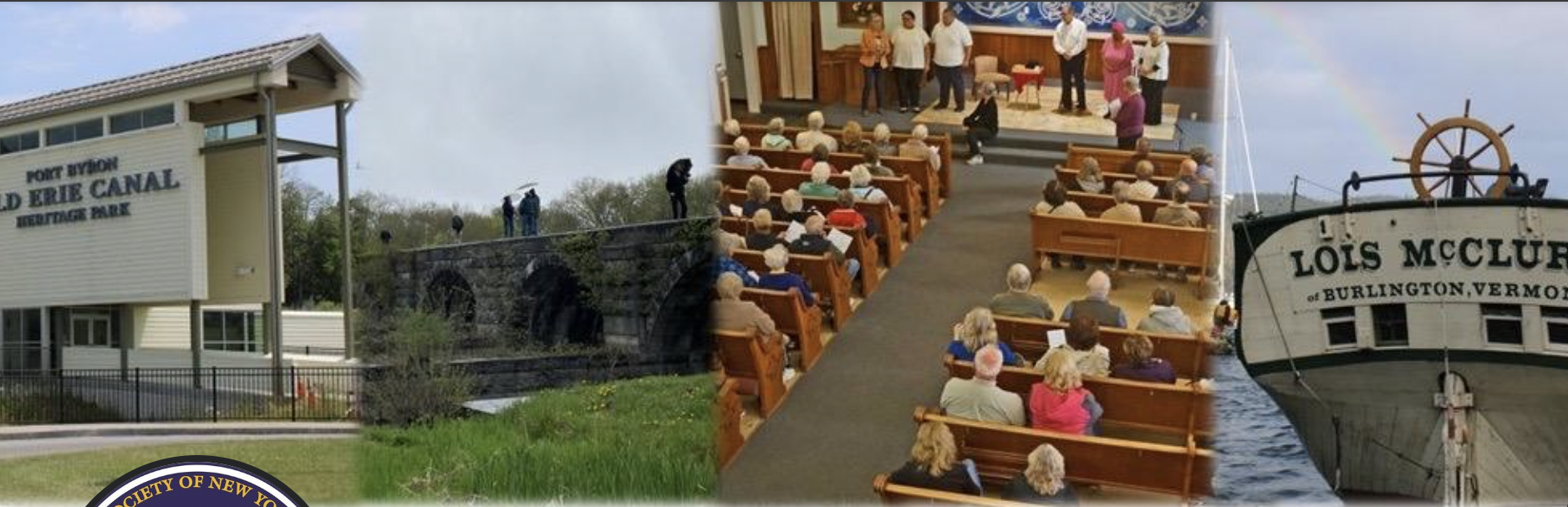
Consider this post as a continuation of Port Byron Then and Now, a part 2 if you will.
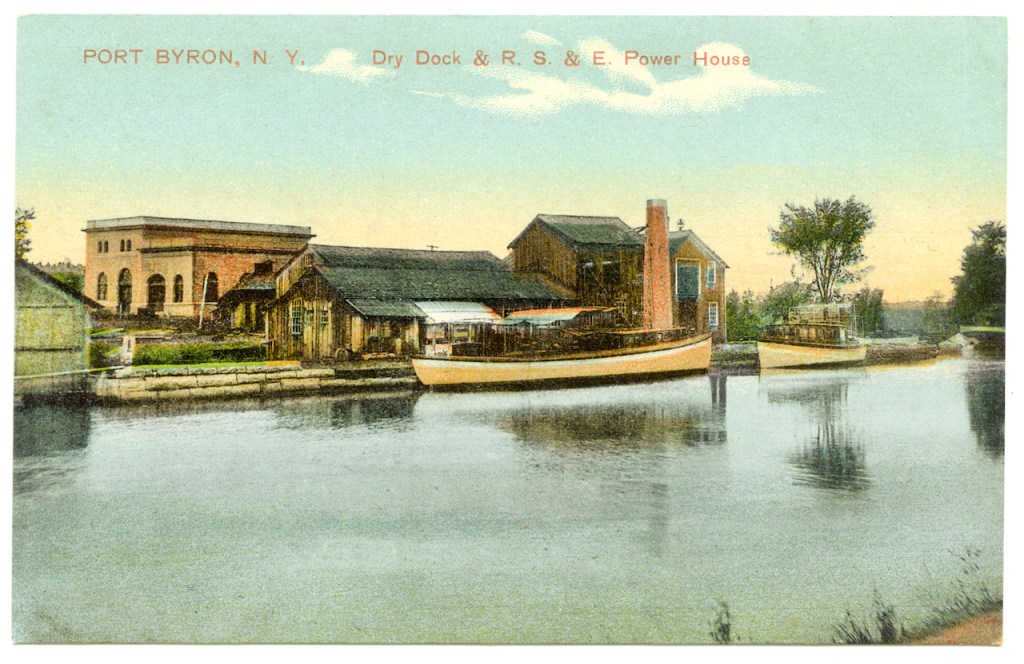
I know I’ve looked out at the R. S. & E. Power House from the area of Erie House as well as other angles. If I lived closer to Port Byron, I’d drive over and photograph it from this very same angle. I have to do this next time, or maybe someone nearby can do it before I get there [in March] and send it in to use as a post script. From this perspective, lock 52 would be off to the right side of the card. The water is drained now, so the only boat in sight today would be Lois McClure. Where the boats are tied up is now a stone reinforced “canal bank”. The nearer wooden buildings are gone. The brick building is the R. S. & E. Power House, but what does that even mean? I’ll answer that in a bit.
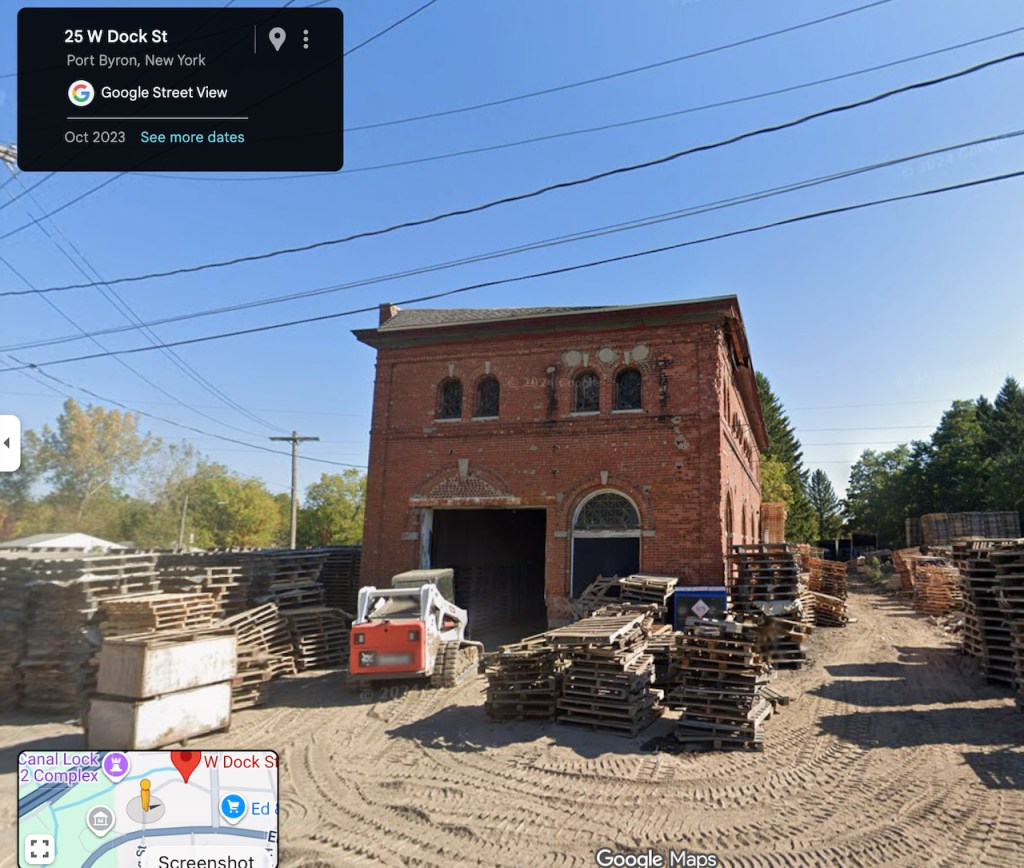
Here’s what the Power House looks like if you stand at 25 W. Dock Street, the opposite side of the building from that shown in the postcard. Beyond the pallets and trees to the left, you’d see Lois McClure.
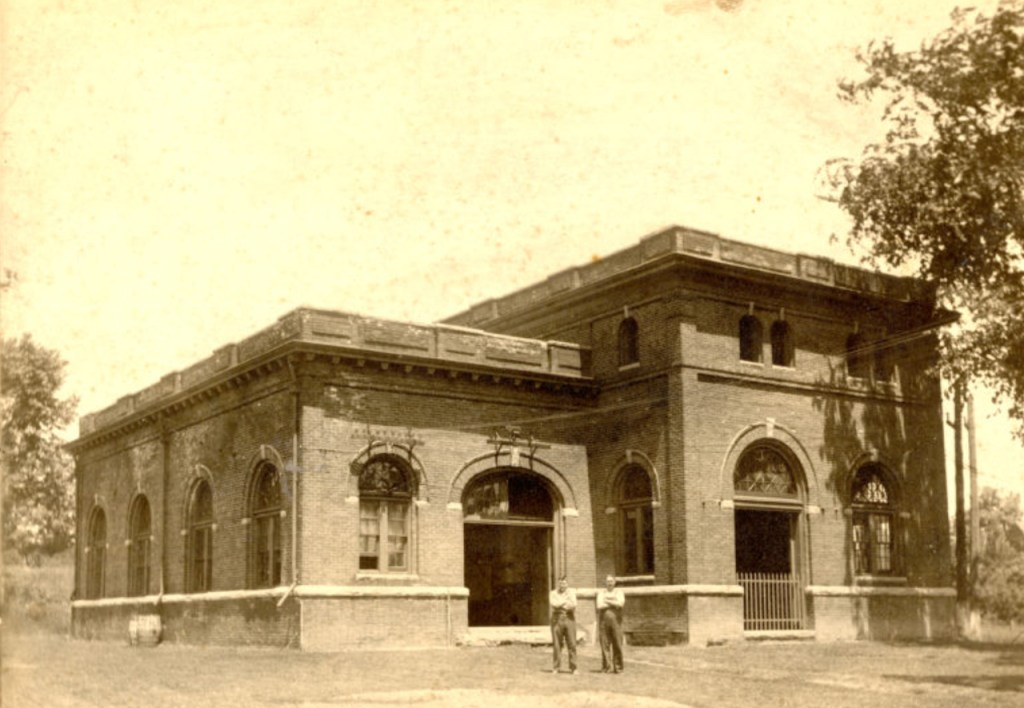
The image below shows the building soon after 1910 when it made Port Byron “the best lighted village in the state”. Click on the image below to read the source of that quote and much more.
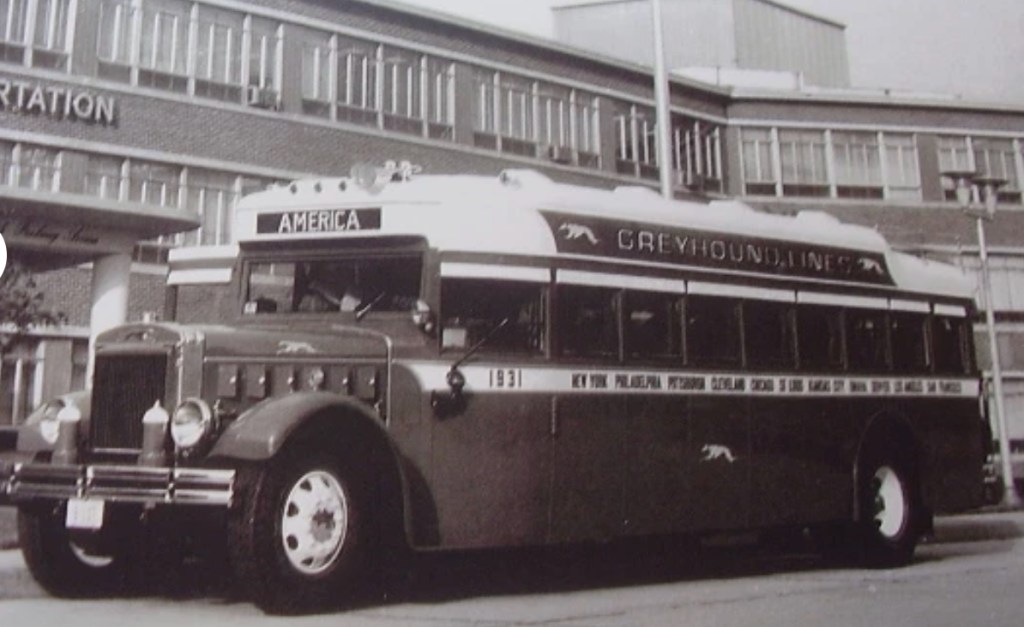
What was the R. S. & E? It was the Rochester, Syracuse, and Eastern Railroad, an 83-mile interurban electric railway, or trolley, that operated between Rochester and Syracuse, New York, from 1906 to 1931. According to this historical marker in Jordan NY, the successor conveyance was Greyhound, like this Mack below, or here, or here in an advertisment of the period.
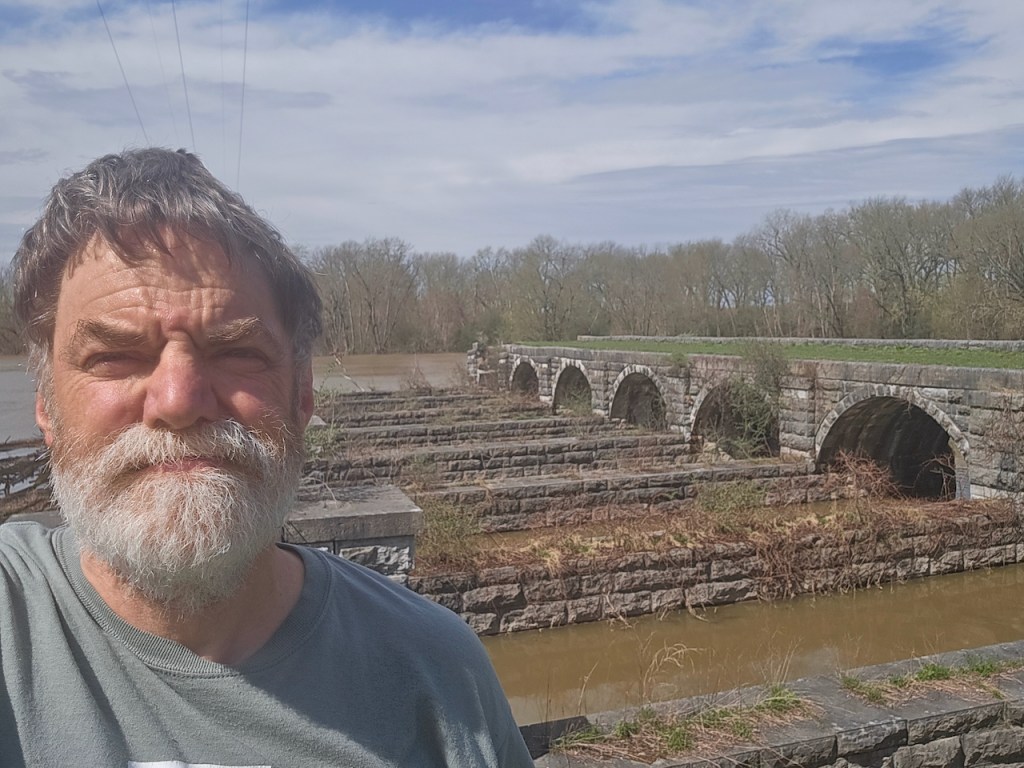
Smaller towns with trolley stops and rails included Fairport, Macedon, Palmyra, Newark, Lyons, Clyde, and Savannah. This Dispatches post a bridge image in Lyons showed a R. S. & E. trolley car. Ruins of other bridge abutments can still be seen in places that now almost defy explanation, like locks in the woods; Lock 51 comes to mind, as does lock 54.
These traces are all across the state too; in fact a major goal of the Canal Society is to protect NYS’s canal heritage and future through research, preservation, education, and advocacy, bringing enthusiasts together to safeguard historic sites, support canal revitalization by means of trails, ports, facilities, and to interpret canal history for the public.
Watch this space for information about the Canal Society’s March 2026 winter symposium.
Many thanks to Bill Hecht for cleaning up this image.


 Dispatches from the Samuel Center
Leave a reply to Lee Rust Cancel reply