
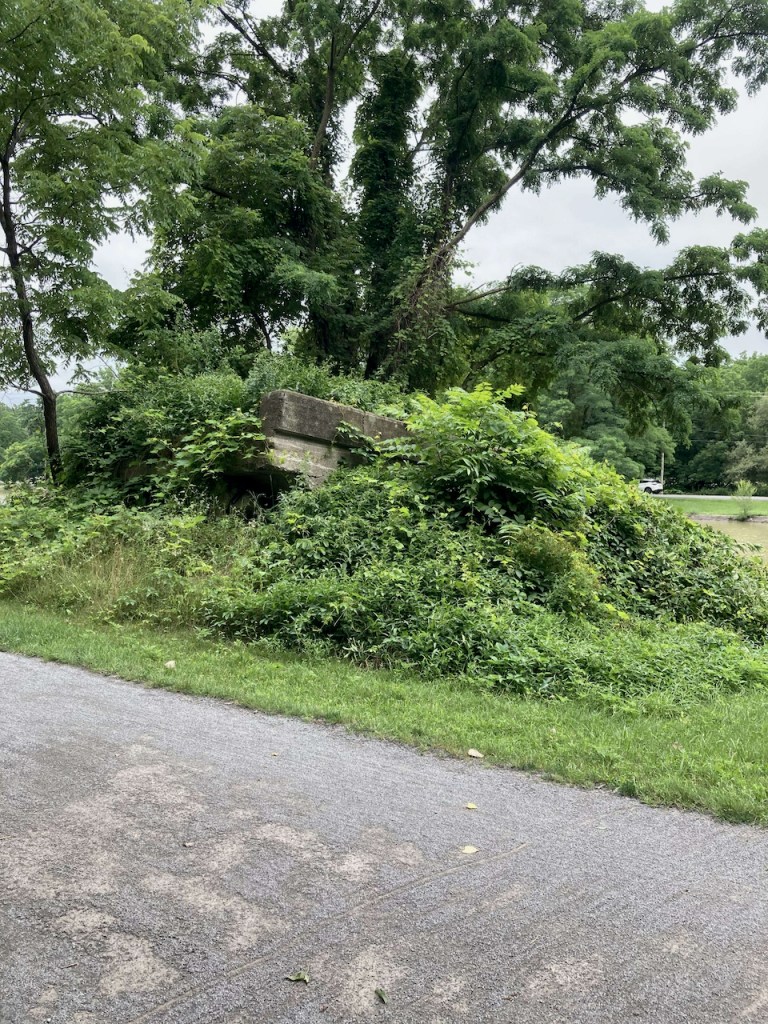
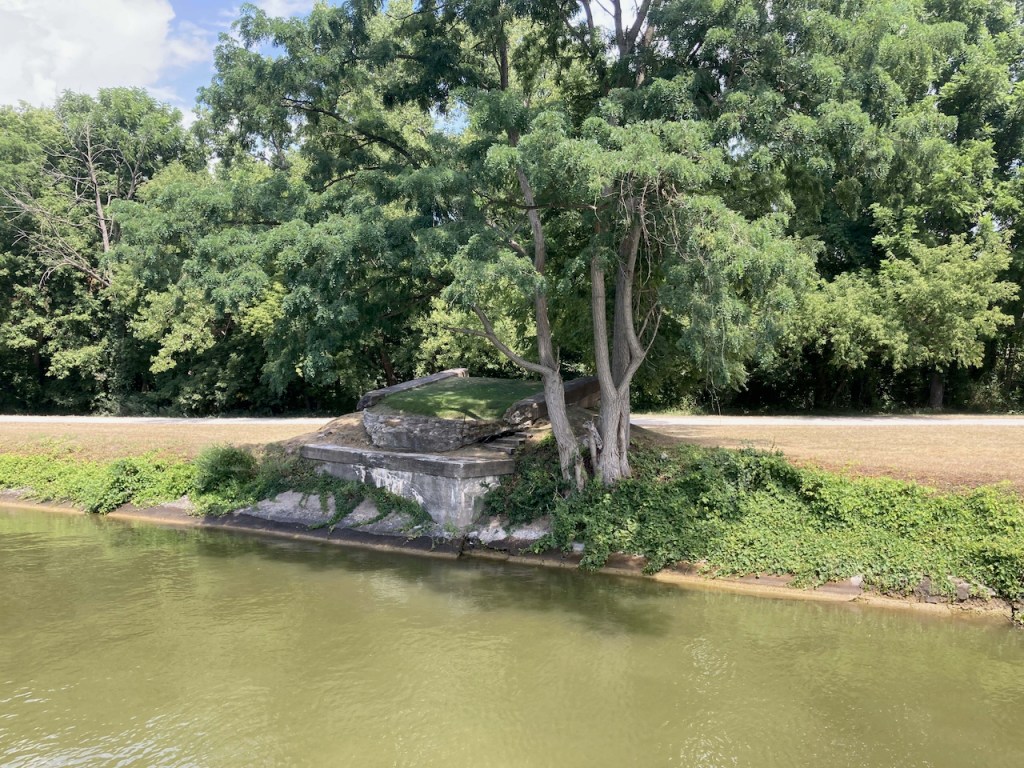
You’ve seen places like this, sometimes called “disturbed soil,” but otherwise, forgettable. I recall seeing ruins like this from a train in Italy, areas left overgrown and unused in the middle of golden wheat fields, making me wonder if the rubble was recent or ancient, a temple perhaps.
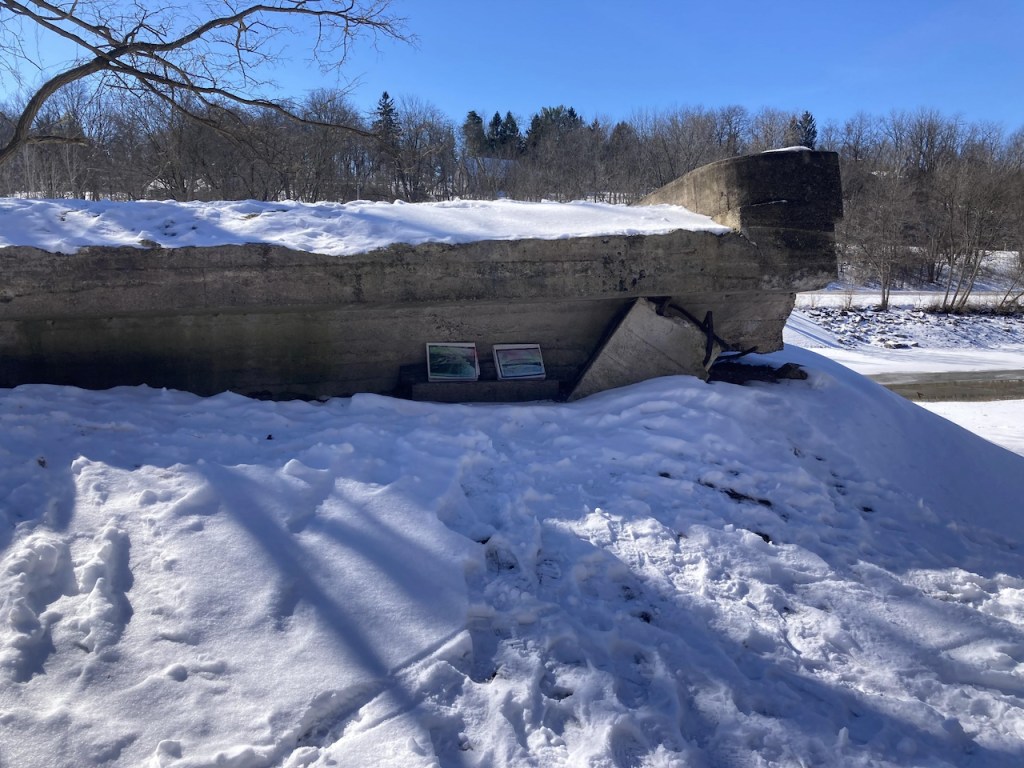
Here’s the same location in a different season.
Thanks to Ed Sullivan, this location in Monroe County has a custodian and champion. He’s cleaned up the location and even prepared a binder with photos of what was once there. Ed explained his Cartersville project to me during the April 2026 study tour.
Here’s Ed’s story: “Five years ago, I adopted an overgrown forgotten piece of concrete along the towpath a few hundred yards east of the Cartersville Guard Gates. This artifact was part of the approach to the Cartersville Bridge that was built in 1908 – 1912 to carry Marsh Rd across the new Erie-Barge Canal enlargement.”
Note: I mis-identified the Cartersville location in a post earlier this year here and posted a correction later because of Lee Rust’s ingenious “rebuttal” here.
Ed continues, “I cleared the vines, weeds, trip hazards, etc., and planted grass which I maintain.”
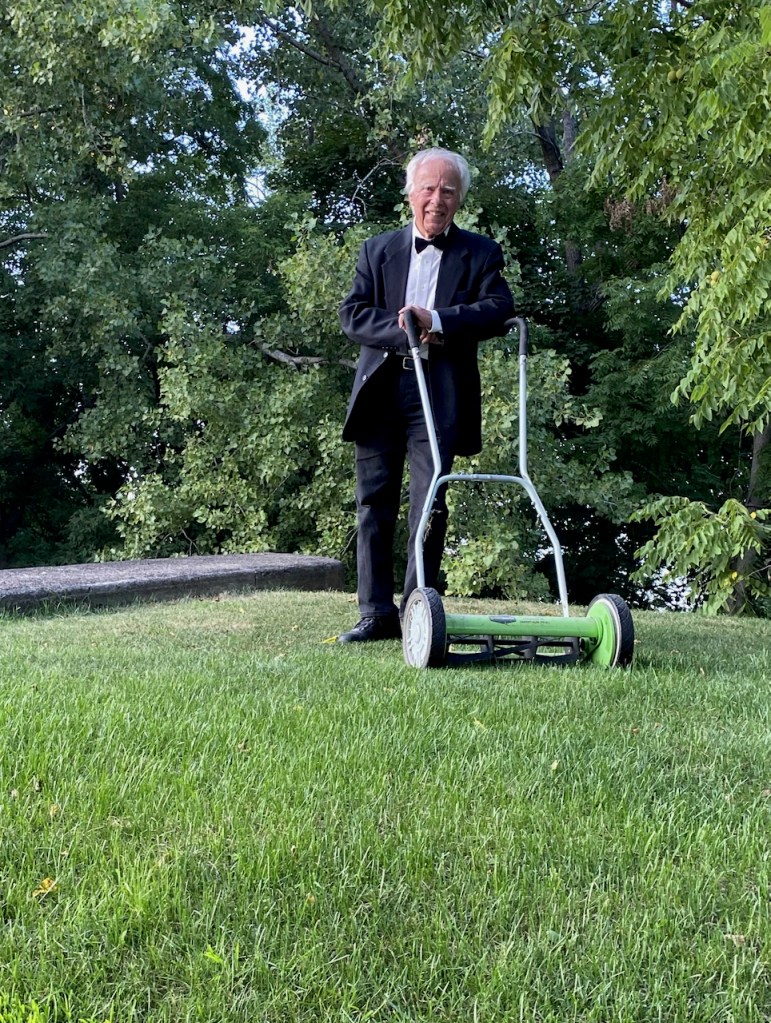

As a result of Ed’s labor of love, what was once disturbed soil is now a place revered,
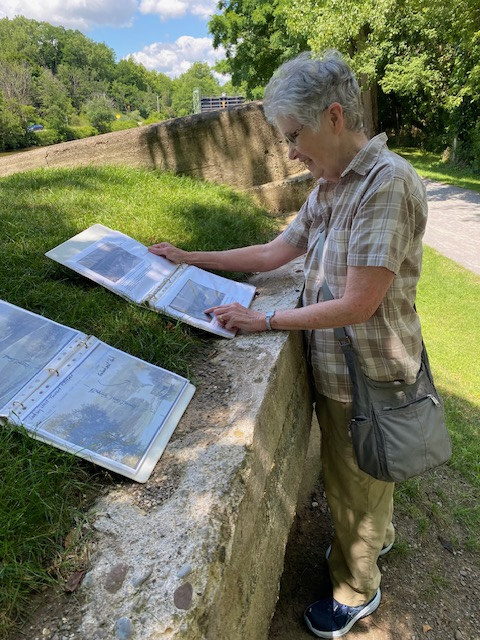
a place interpreted by binders Ed leaves there for passers-by to browse.
Since this is a post in the “faces and voices” series, here are Ed’s responses to the questions addressed in the series.
Ed become interested in the canal because of the Great Embankment. “What’s not to like about growing up along that area between Pittsford and Bushnell’s Basin?” he writes. “I no longer live adjacent to what is now Embankment Park, but when I did it was 50 – 60 ft lower and operated as the Pittsford Town Dump. The terrain at the time retained a small piece of the original canal, and the surrounding borrow pits used to build the Erie-Barge embankments were still prominent.”
His favorite location is clearly the overgrown piece of concrete shown above. He writes that to interpret that place, he “created a series of notebooks illustrating the history of Cartersville, the construction of the Great Embankment, the Cartersville Bridge, etc., that are kept at the site all year long. This section of the towpath is a busy thoroughfare, and many people stop here to rest, enjoy the shade, take a moment to contemplate the canal, and learn a little about its construction and the history of the area.”
He adds, “One thing I wish is that people know how important the canal was to the area’s development and what an enormous task it was to build it.
Many thanks to Ed Sullivan for sharing these photos and this story about his adopted space that rivals anything in the Italian countryside or anywhere else.
Unrelated but please read: Almost two years ago, I added a post called “Seeing Then in Now.” In today’s NYTimes, an excellent example of what I hoped to do in that post can be seen. Read it here.


 Dispatches from the Samuel Center
Leave a comment